
What does sovereign AI do for my token bill?
Pakistan has a public rupee tariff for local inference. The buyer’s real question is what one accepted piece of work costs, and what “sovereign” control comes with it.
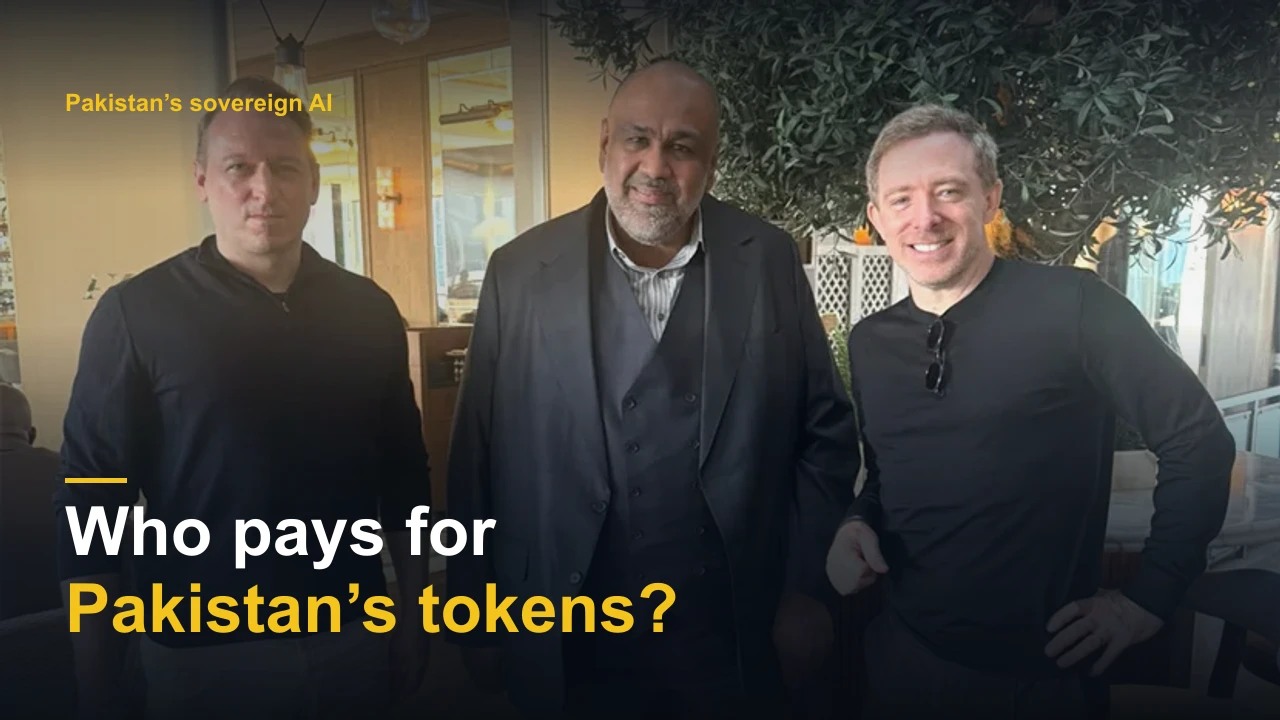
- A November 6 CodeNinja and Paranine announcement describes a commercial offer for in-country inference. Paranine’s catalogue now lists token prices in rupees.
- The catalogue and provider pricing FAQ disagree on gpt-oss 120B output price. Each is a published rate. Confirm the applicable rate with the provider before budgeting.
- At the catalogue rates, 1,000 input plus 500 output tokens cost about Rs 0.11. That is token billing, not the cost of a correct, reviewed, accepted task.
- Sovereignty is a set of operational controls over data, route, keys, model, and exit. A local endpoint alone cannot answer all five.
On November 6, CodeNinja and Paranine announced a commercial technology partnership: CodeNinja would bring enterprise AI applications, and Paranine would provide in-country inference, with government, banking, and healthcare among the intended markets. Paranine’s current model catalogue gives a buyer something concrete to inspect: a rupee rate for tokens. That moves the conversation from “sovereign AI is coming” to a more useful question: what does a workload cost, and what control does the buyer actually own? The partnership announcement
The announcement is a statement from the partners. It does not name a paying customer or demonstrate a regulated production deployment. The same caution applies to national plans. On October 26, the Pakistan Digital Authority described strategic discussions with DFINITY about an AI Factory for public-sector software. That remains a plan under discussion. No live service or customer bill was published. PDA’s announcement
There is a price list. There is also a discrepancy.
Paranine’s model catalogue lists gpt-oss 120B on two routes, “PK NPU” and “Global.” Both show Rs 30.08 per million input tokens and Rs 150.39 per million output tokens. The catalogue describes the first pool as in Pakistan and the second as partner capacity outside that pool. These are provider-published prices. No independently checked invoice is available. Paranine’s current model catalogue
The provider’s own pricing FAQ gives a different output figure: Rs 180.47 per million tokens for the same model. Its arithmetic example uses Rs 30.08 for one million input tokens and Rs 45.12 for 250,000 output tokens, which implies the higher rate. Both pages are live provider materials. Until the meter, quote, or contract resolves the difference, a procurement team should not copy one number into a cost model as though it were the final bill. Paranine’s pricing FAQ
For scale, take one deliberately small request: 1,000 input tokens and 500 output tokens. At the catalogue rates, the input is Rs 0.03008 and the output Rs 0.075195, for Rs 0.105275, or about Rs 0.11. At the FAQ’s output rate, the same token counts total about Rs 0.12. That calculation says what those tokens would cost at the listed rates. It says nothing about whether the answer is correct, whether the request must be retried, or whether a person must review it.
The buyer’s useful unit is rupees per accepted task. Define an accepted task first: for example, an answer that passes a fixed rubric, cites the right source, stays within a latency limit, and needs no more than an agreed level of human correction. Then calculate the full cost: input and output tokens, retries, orchestration, support, any dedicated capacity, and staff review, divided by completed tasks that pass the rubric. A cheap answer that fails and needs two retries plus a manual rewrite adds those retries and staff time to the cost of that accepted task.
The provider lists dedicated enterprise capacity as custom-priced. A public shared-route rate is only a starting comparison. A buyer needs the actual quote and measured task result.
What does “sovereign” mean in the contract?
Stanford HAI researchers Caroline Meinhardt, Juan N. Pava, Caroline Yee, and James Landay describe sovereignty as a spectrum of agency across AI supply chains, rather than a promise of complete self-sufficiency. Their review of commercial offerings asks whether they increase a customer’s ability to make independent decisions or simply shift dependencies elsewhere. That is the right test for a local inference offer: identify the control the buyer gets and the dependencies that remain. Stanford HAI’s review of commercial AI sovereignty offerings
The contract should say where prompts are processed and logs stored, who holds the encryption keys and administrator access, which model and software versions are running, and who can change them. It should name the hardware, networking, and support dependencies too. If the provider changes its price, model, or availability, the buyer needs a tested way to export its data and move the workload with its audit history intact.
“Data stays in Pakistan” answers only part of that checklist. A local server may still run foreign model weights and depend on imported accelerators, vendor updates, or external technical support. That can be a sensible arrangement. Sovereignty is stronger when the contract names the boundaries, access controls, dependencies, audit rights, incident duties, service levels, and exit path instead of asking the word to do all the work.
Ignite’s P57167 tender makes the distinction visible. It asks for primary and disaster-recovery hosting, sovereign-model development, subsidised tiered inference across at least 20 open-weight models, and full assignment of model weights, training code, and datasets. That is a set of requirements in a procurement document. It is not evidence that a contract was awarded, that an endpoint is serving users, or that a customer is paying a particular rate. Ignite’s tender documents The public RFP listing identifies the October 5 closing date and corrigendum, but does not give a user tariff beside the notice. Ignite’s RFP listing
Choose a first workload the buyer can verify
I’d start MoITT’s first public comparison with a Pakistani media company that already pays to transcribe Urdu interviews. Run the same recordings locally and on its existing service. How many words does an editor have to fix? What do ten usable minutes cost once you include her time? A producer with a real deadline can tell you quickly whether the local service is worth keeping. A bank with recordings of private customer calls has to clear a different bar.
Leave the speakers’ English product names and Urdu numbers in the recordings. They’re exactly the words an editor cannot afford to publish incorrectly. Count the retries and time the corrections. If the local route cuts the token bill and adds half an hour in the edit, the producer can put both numbers on the same invoice.
Banks may be a valuable market, but local hosting is not a regulatory permission slip. The State Bank’s cloud framework sets minimum risk-based requirements for regulated entities outsourcing workloads to cloud providers. Each institution still needs to assess the workload, controls, provider, and approvals that apply to it. SBP’s framework on cloud-service-provider outsourcing
A parliamentary reply about Data Vault’s AI Cloud illustrates the kind of buyer-side work involved. MoITT said it had not formally onboarded or been approached for production workloads on that provider’s cloud. The ministry had not received its Cloud First Policy accreditation application. Possible pilots would remain subject to government procedures, security clearances, and inter-ministerial consultation. That answer concerns Data Vault, not Paranine or Ignite, and cannot establish that no local provider has customers. It does show why an institution must clear its governance process alongside choosing a hosting location. National Assembly reply
Make the next bill answer the question
An industrial group can make perfectly good money renting out a site. In Texas, Riot’s filing actually names the tenant that signed its powered-land lease: Anthropic. Pakistan’s ministries should be just as precise when they claim credit for building an AI industry. Who bought inference here? What were they buying abroad? What made them move? Riot’s quarterly filing
What I want from MoITT is the first customer’s second invoice. Put the Urdu transcripts, the editor’s time and the foreign-service comparison next to it. Show me which records stayed in Pakistan and who can keep serving the model if a foreign supplier walks away. If the service earns the repeat order, we’ll know what we bought with sovereign AI.
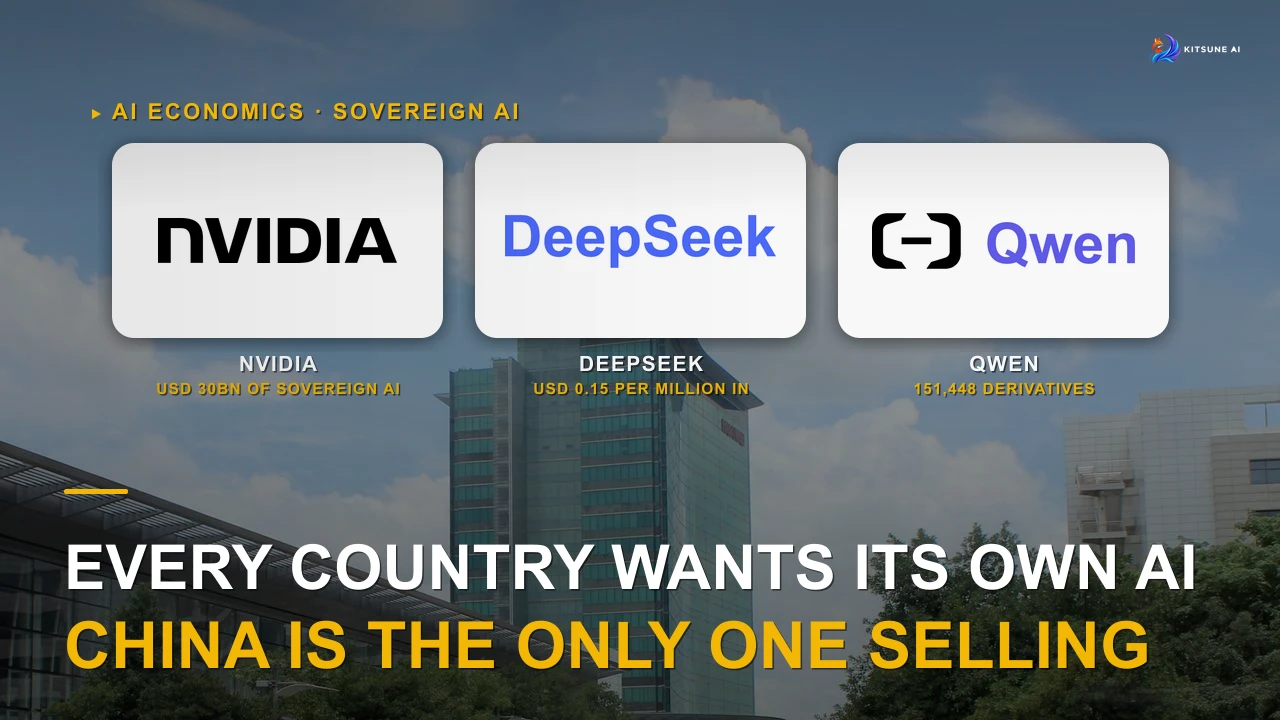
Chinese AI companies will take the entire sovereign AI cake
Two days ago in Shanghai, Huawei's Eric Xu said he cannot sell Ascend abroad because he cannot even feed China. Read tha
Read article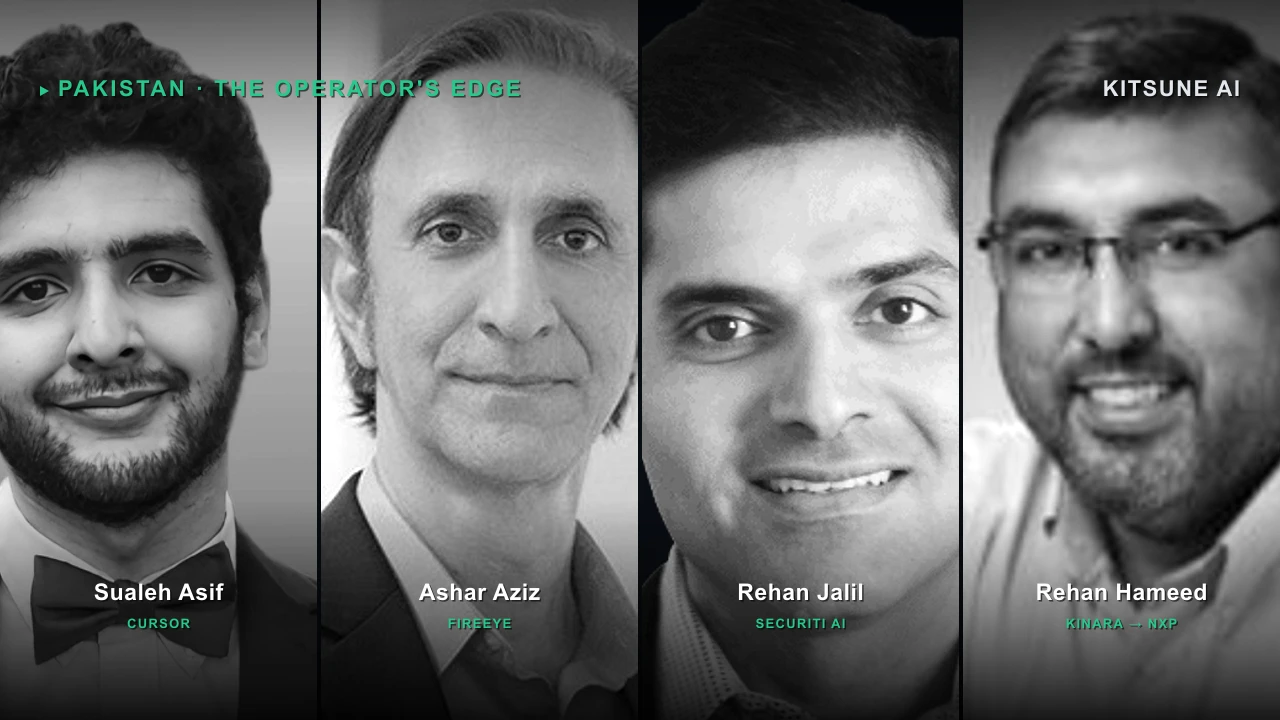
The Pakistanis Quietly Building the Machines That Replace Work
The country that sells the most human work on Earth is also producing the people building the machines that end it. That
Read article
SBP and fintechs should abandon QR payments
At a counter, a customer is ready to pay. A QR sign sends them into a camera, an app and a recipient check. SBP and fint
Read article
Sazgar is taking Pakistani manufacturing abroad
After building three-wheeler and electric-vehicle manufacturing in Pakistan, Sazgar has opened its first overseas plant
Read article