
Ligue 1's app lasted 1 season, and its back to TV rights
Ligue 1+ is in its second season on air. The LFP is already sounding out Canal+, Amazon, Apple, Netflix and Paramount for the 2029 rights cycle, because one season of subscriber money did not replace the broadcaster.
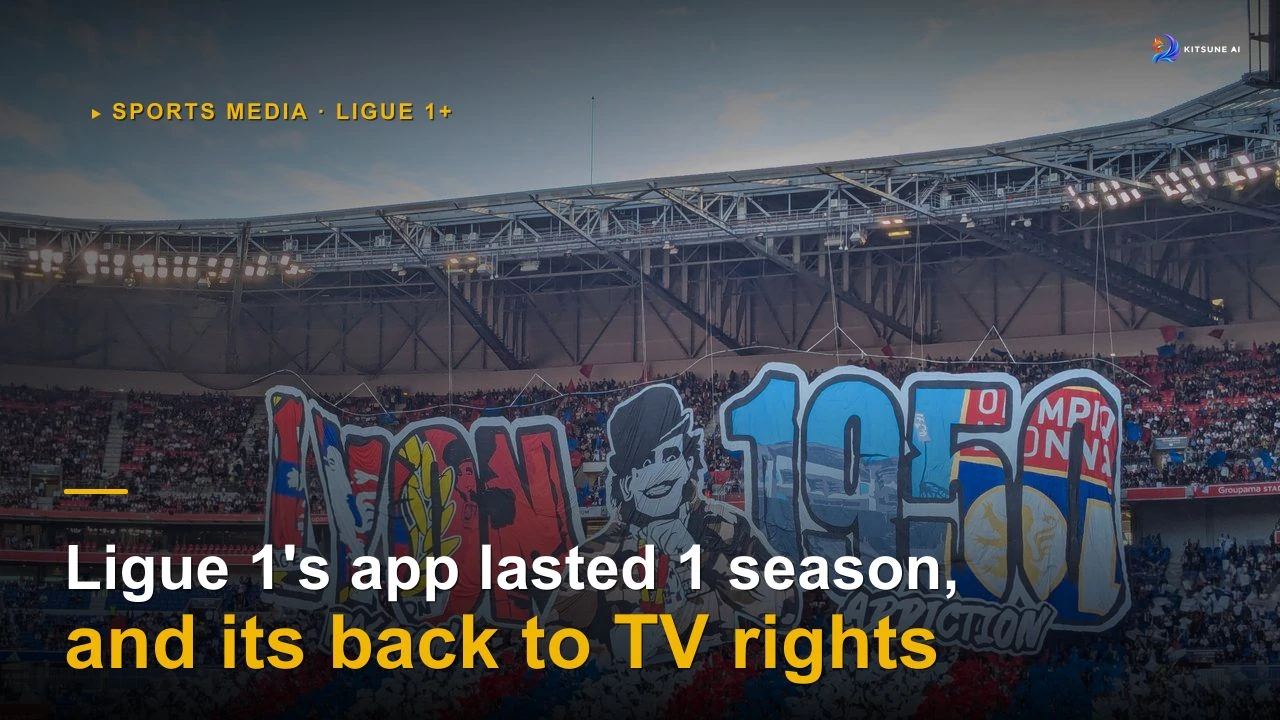
- OneFootball, 20 August 2026: season two opened with Marseille against Strasbourg. Season one averaged 1.1 million subscribers.
- SportsPro, citing L'Equipe: the league's reported distribution from Ligue 1+ was EUR 142 million, against a projected turnover of EUR 158 million. Télérama, 23 August 2026 put last season's money to the clubs at about EUR 100 million.
- Canal+ was about EUR 600 million until 2020. DAZN was about EUR 400 million in 2024, and walked after one year of a longer deal. beIN's EUR 78 million is gone this season.
- Inside World Football, 26 August 2026: the LFP may open a consultation as soon as October for rights from 2029 to 2034. L'Equipe reports a March exit clause in the distributor contracts that could hand the product to a broadcaster earlier.
Ligue 1+ is still streaming every match. Season one already proved that subscriber money lands nowhere near the old television price, which is why the league is back at the broadcast table while the app keeps running.
Season two is on air, and the cheque is still small
Ligue 1+ carries all nine matches this season. DAZN is still in the picture as a distributor, which is a different job from holding the rights. beIN has no Ligue 1 match in France. There is no free-to-air live game. Olivier Bramly has taken over from Nicolas de Tavernost at LFP Media, and the public line is growth: keep the 1.1 million, add more, make the platform the place French football lives.
That is a product update. It is also a small number next to the deals France used to sell.
Télérama's account of last season is about EUR 100 million to the clubs. SportsPro's earlier report, from L'Equipe, had the league distributing EUR 142 million from the app, on a projected turnover of EUR 158 million, after EUR 16 million in distributor commission. Setup was reported at EUR 66 million. An August estimate that same year had capped the clubs at EUR 80.4 million, before the first-month sign-ups pushed the forecast up. Those two club figures are the same story at two dates, read a few months apart. Subscriber money landed in the low hundreds of millions of euros. Canal+ used to land near EUR 600 million. DAZN's broken deal was about EUR 400 million.
A million subscribers in month one was a real launch. It left the league hundreds of millions short of the price television used to pay.
The league is already back with the broadcasters
Inside World Football, 26 August 2026: the LFP is preparing to sound the market as soon as October, for the cycle that runs 2029 to 2034. Bramly has been in the room with Amazon, Paramount, Apple, Netflix, and Canal+. L'Equipe adds the clause that matters. The contracts with the companies that distribute Ligue 1+ can be exited in March. If a broadcaster bids hard enough for 2029, the league can offer the product two years early and walk the current distribution deals.
So the commercial fact sits next to the product still streaming. One season of going direct, and the rights conversation is back with television. The app can stay up as the pipe. The buyer of the rights is who the clubs actually need.
This is the same movie since Mediapro collapsed in 2020. Amazon filled a hole and soured Canal+. DAZN signed and left after a year. beIN took one match a week and then left. Each time the league owned less of a market and more of a workaround.
What a rights market looks like when television is still in the deal
I spent two years inside the Pakistan Super League's media world, and the lesson that stuck was about who still writes the cheque. In 2021, as head of media and digital at Nestlé Pakistan, I was one of the first advertisers to put real money behind PSL livestreaming. That was the year the stream was sold separately from television. Before 2021 the stream came packaged with the TV rights. I bought an audience that a broadcaster was already carrying into houses, and I paid a digital price on top of that, because the league had left the television deal in place and sold the stream as an extra surface.
Two years on that league taught me the boring part. The rights holder who also has to acquire, serve, bill and fight piracy is now a media company with a football problem. The advertiser does not pay you for the app. The advertiser pays you for the people. PSL could sell me the stream because the television deal still existed underneath it. France took the television deal away from itself, stood up Ligue 1+, and discovered that 1.1 million subscribers do not clear a EUR 400 million hole, let alone the Canal+ years.
The same shape showed up when the NBA's local television networks stopped paying and the streaming math had to stand on its own. I wrote that down against the PSL numbers. A league can own the pipe. It still has to sell the night to someone whose business is distribution.
The March clause is the decision
de Tavernost had talked about EUR 100 million more for the clubs if prices rose and about 200,000 new subscribers showed up. That is a forecast from inside the league. The March exit, reported by L'Equipe, is a date on a contract. If the October conversations produce a broadcaster who will pay like Canal+ used to pay, the league can hand them the platform before 2029 and stop pretending subscriber growth will close a EUR 400 million gap.
Ligue 1+ can keep streaming every match this season. I have watched a league try to sell the stream as its own product. The advertiser still asks who gathered the audience. After one season in France, that audience was still with the broadcasters the LFP is booking again.
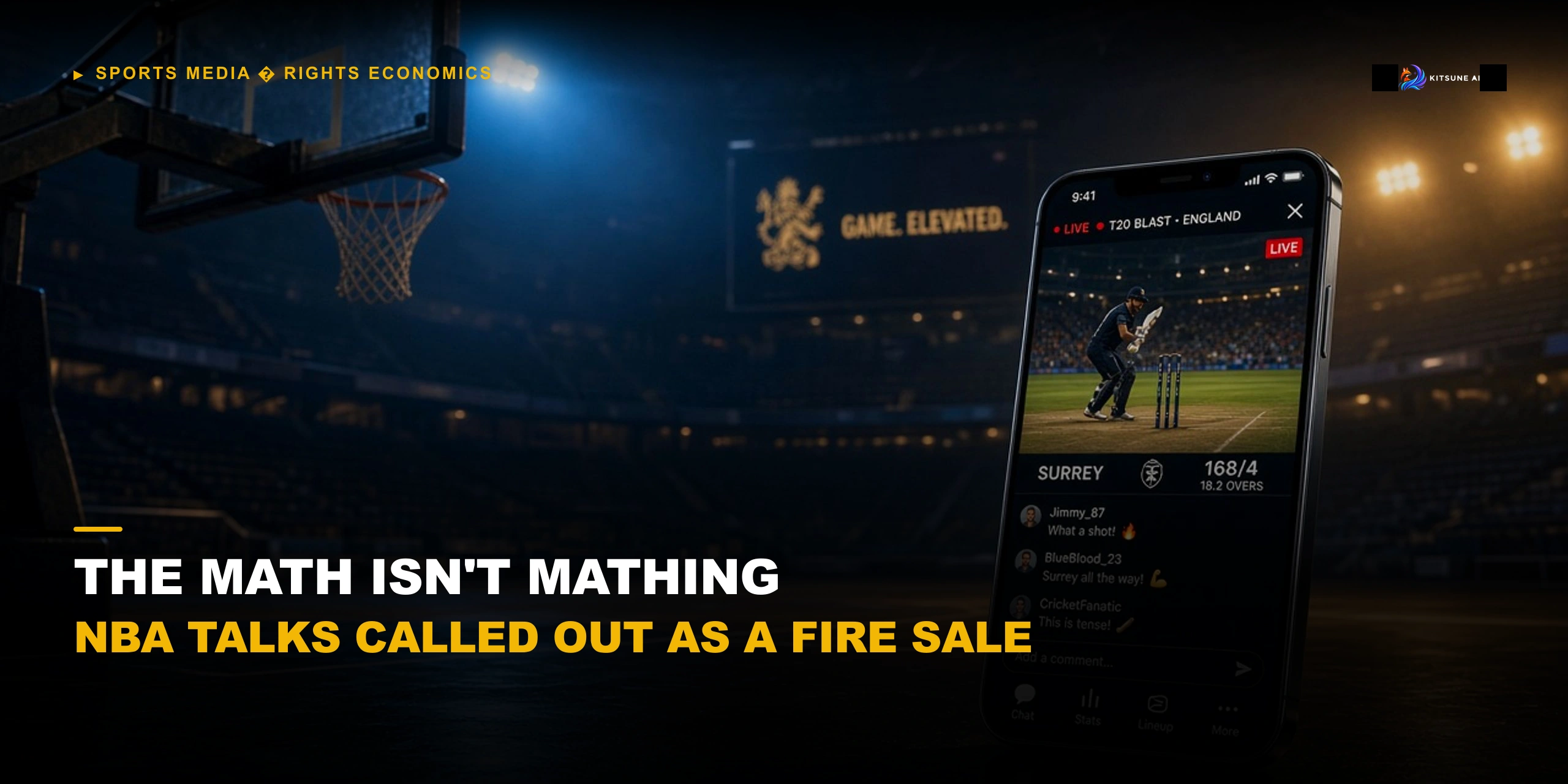
The math isn't mathing for global sports streams. NBA talks with Youtube called out as a fire sale.
Tech blogs are calling the NBA talks with YouTube a streaming revolution. It is a bankruptcy fire sale. Cable subsidized
Read article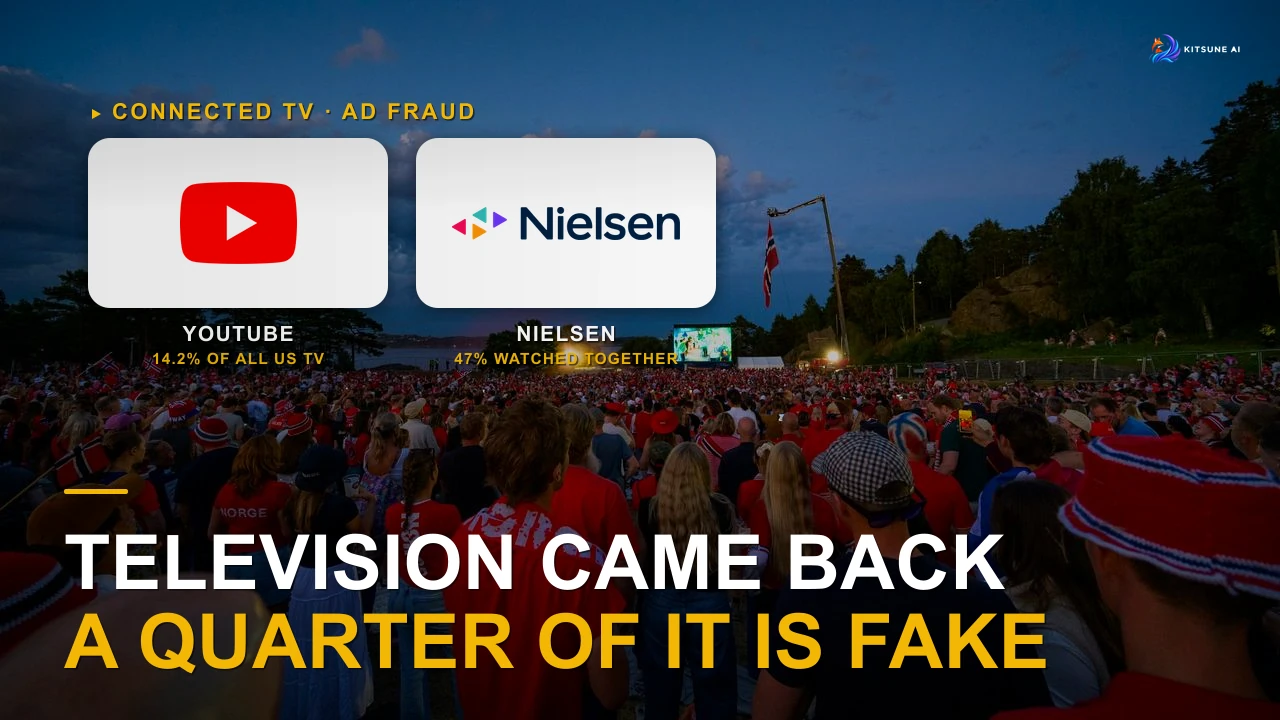
TV is not dead. It's now connected. And 25% of it is fraudulent.
Pixalate measured a quarter of the open programmatic connected TV market as invalid traffic in Q1 2026. DoubleVerify cau
Read article