
The math isn't mathing for global sports streams. NBA talks with Youtube called out as a fire sale.
Tech blogs are calling the NBA talks with YouTube a streaming revolution. It is a bankruptcy fire sale. Cable subsidized live sports for thirty years by billing millions of homes who never watched a single game. Once that subsidy died, regional networks collapsed, and leagues had to face digital realities. Having built digital streaming infrastructure for PSL at Walee, I watched the exact same ballooning rights math break live sports in Pakistan.
- The NBA is in advanced talks with YouTube for an $850M to $1.2bn local streaming hub covering 25 to 29 franchises starting in 2027. This is not innovation by choice. Diamond Sports and FanDuel Sports Networks went bankrupt, leaving 13 NBA teams stranded on one-year stopgaps.
- For thirty years, Regional Sports Networks (RSNs) printed money on cable carriage fees. Every household paid $5 to $8 a month for regional sports channels tucked into basic cable packages, even if 90% of subscribers never watched a second of basketball.
- In digital streaming, bundling does not save you. Every subscriber must be acquired, authenticated, and retained on direct intent. The platform takes its cut, users churn the moment the season ends, and digital advertising CPMs cannot cover nine-figure legacy rights guarantees.
- At Walee, I pioneered the commercial streaming of the Pakistan Super League (PSL), syndicating rights across Tamasha, Begin, Myco, Daraz, and SnackVideo to deliver 3.4bn views and 57.4M unique viewers. We proved mobile could stand as the primary screen. We also saw how sports rights costs balloon to levels digital ad markets cannot sustain.
When a tech blog writes about live sports moving to streaming, it writes a victory lap. When a media operator reads the same deal, they look for the funeral.
The NBA is in late-stage talks with YouTube to build a direct-to-consumer streaming hub for local team broadcasts. The rumored price tag sits between $850 million and $1.2 billion across 25 to 29 teams for the 2027 season. Silicon Valley calls it modernization. In reality, it is a bankruptcy fire sale.
For three decades, live sports ran on the sweetest subsidy in modern business: basic cable carriage fees. Regional Sports Networks extracted five to eight dollars every single month from millions of households who only wanted to watch HGTV or the evening news. The non-fans paid for the superstar payrolls.
Then consumers cut the cord. The RSN business model did not merely decline. It disintegrated. Diamond Sports Group filed for Chapter 11 bankruptcy. Warner Bros. Discovery shut down its AT&T SportsNet division. Local rights for baseball, basketball, and hockey collapsed across the country. The NBA did not move to YouTube out of visionary foresight. It moved because its regional television partners went broke.
Now leagues must sell on intent. And intent is a brutal master.
The math is not mathing for global sports streams. In television, your revenue comes from passive household distribution. In streaming, every viewer must be acquired, authenticated, and billed at the digital turnstile. The minute the championship trophy is awarded, subscribers cancel their credit card mandates. Churn spikes to thirty percent overnight.
I lived this exact economic tension on the pitch. When we engineered the digital streaming architecture for HBL PSL Season 10 at Walee, we did what many in Pakistani television claimed was impossible. We built a unified syndication coalition across Tamasha, Begin, Myco, Daraz, and SnackVideo. We delivered 3.4 billion views and reached over 57 million unique viewers, proving mobile could beat legacy television on reach, attention, and brand engagement.
Trade publications like Variety covered our commercial playbook because we showed that digital streaming could carry a premier sports property. But behind every record-breaking viewer count sits the cold truth of the balance sheet.
Sports federations get addicted to the guaranteed up-front rights check. The Pakistan Cricket Board, like the NBA, watched broadcast rights values double and triple across consecutive cycles. Television bidding wars created the illusion that live sports rights are an asset that only appreciates.
The television subsidy is dead. In digital streaming, nobody pays for games they do not watch. There is no passive subscriber base padding the margin. Digital advertising CPMs in emerging markets like Pakistan run between one and three dollars. Even with dynamic ad insertion and programmatic trading, ad revenue alone cannot service rights fees that were priced on television monopolies.
When rights owners make the leap to digital, the terms get less sweet with every cycle. The tech monopolies do not write blank checks. They demand revenue shares, minimum guarantees, and inventory ownership. They know the league has nowhere else to turn.
The NBA will take its check from YouTube. But franchise owners will soon discover what cricket broadcasters in South Asia already know. Once you leave the warmth of the cable bundle, every dollar must be earned from fans who actually want to watch. And that turnstile does not forgive inflated rights fees.
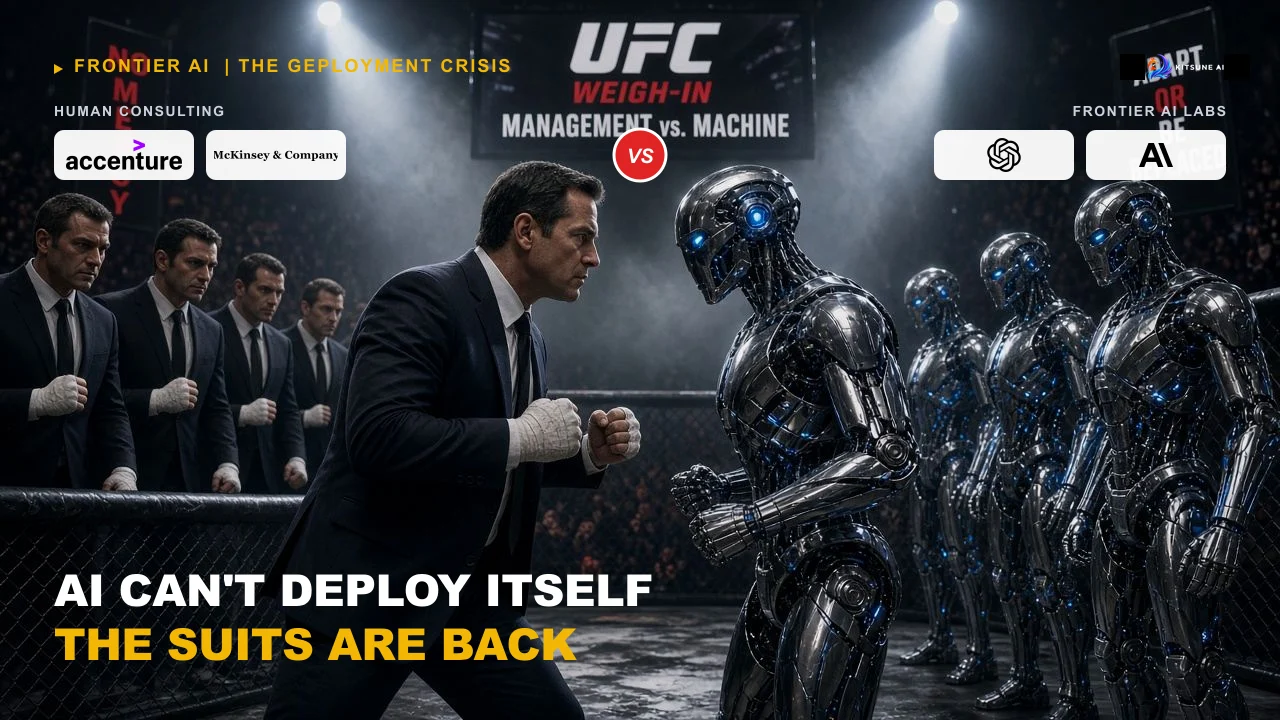
Frontier Labs are investing into Forward Deployment because AI doesn't work on its own.
For two years, the pitch to boards was that software was autonomous. Buy an API key, stream tokens, and your business tr
Read article
An early obituary for The Trade Desk: how big tech broke media
By 2015 agencies had already picked them as the independent desk. 21 months after the USD 70bn high, ChatGPT ads went th
Read article