
JEV is the perfect example of the Valley's echochamber
Jev is a fast, typed classifier. On a constrained question it returns a choice or a score, with a confidence number, and skips the open-ended reasoning that produces free-form text. A launch thread past 30 million views treated that narrow call as a company.

- TypeSafe, founded by Diogo Almeida, formerly of OpenAI, released Jev on 15 September 2026. You send state and a typed question. It answers inside the options you already set: a choice, a score, a yes or no, plus a confidence number. It does not write the paragraph around the answer. DigitalOcean.
- The speed and price are the company's own claims: on the order of 70 to 500 milliseconds, about $0.042 per million input tokens, output priced at nothing, and 40 to 200 times faster than frontier models on the tasks TypeSafe chose. No large public benchmark has confirmed that across real workloads.
- Ben Tossell, in the posts DigitalOcean gathered: "A new kind of AI came out last week. It does not talk. It decides." Linas Beliūnas: it gets unreliable when the question hides several judgments, needs missing information, or depends on long reasoning.
- Prefactor: removing free text removes one failure, the invented sentence. A wrong class, stated with high confidence, still walks straight into the software that trusted it.
A fast classifier earns its keep as a cheap, constrained pass inside the models companies already buy. Thirty million views treated that pass as if it were a new category of firm.
What a typed classifier actually does
You send state and a typed question. Jev returns one of the answers you allowed, with a probability or a rigid choice. Think APPROVE or DENY, a route label, a risk score. Beam's note is clear that this is the design, and that pointing it at prose or open reasoning is the wrong tool. TypeSafe calls it System One, the quick pass, and leaves System Two to the frontier models that still write and still reason.
That cut is real engineering. A lot of agent code asks a large model to pick a label, then throws away the paragraph it paid for. A model that can only emit the enum skips the open-ended reasoning step. Skipping that step is the genuine speed advantage: fewer tokens, less time, a lower bill on that narrow call, if the accuracy holds on your data. Skipping that step is also the operational limit. The model never walks you through missing facts, conflicting constraints, or a chain of judgments. It returns the class you asked for, and a confidence number that software will treat as a green light.
TypeSafe's published price, $0.042 per million input tokens, is the pitch for that swap. Their speed claims, 40 to 200 times a frontier model, are the same pitch. Productify went looking for an independent check and did not find a broad one. One comparison, against Claude Fable on a single extraction, produced flattering multiples. Flattering multiples are how a launch post is written.
DigitalOcean recorded the chess clip that travelled with the launch. Jev answered in about 2.6 seconds a move. Fable 5.1 took 6 to 15 seconds and lost on the clock from a position it was winning. A clock win in blitz is a demo of latency. It tells you almost nothing about a workflow, a customer, or a P&L.
The applause arrived before the test
DigitalOcean's account is that the launch thread passed 30 million views in days. Tossell's line is the tone of those days. A new kind of AI. It does not talk. It decides. Text goes in, a number comes out. That sentence is a product description, and it was received as a revelation. Almeida's OpenAI background did the rest of the work. Ship a constraint from a familiar lab, call it a category, and the same feed that rewards speed will reward the story before anyone has measured the tool on a dull Tuesday workload.
Beliūnas said the quiet part in the same roundup. Reliability falls apart when one question is secretly three, when the facts are not in the prompt, or when the task needs a long chain. Those are the tasks people mean by work. Routing a ticket into a bucket you defined can be a Jev call. Deciding what a contract allows, what a factory can bid, what a buyer should pay, is a chain of judgments with missing context. Jev is built to refuse that chain. The launch treated the refusal as the breakthrough.
Prefactor's warning belongs in the integration notes. A typed model cannot invent a clause that was not in the schema. It can still return the wrong label and attach a high confidence, and the agent will act, because there is no sentence to read and doubt. Calibration means it is wrong about as often as the score implies. Software does not pause for that. You have moved the failure from a hallucination a human might spot to a decision a human will not see.
This belongs inside Fable, Grok and GPT
If the useful slice is a fast, typed call, the place for it is inside the frontier model a company already pays for. Fable, Grok, GPT. Let the expensive model write and reason. Let a cheap constrained pass handle the million classifications, the route, the guard, the score. That cuts routing costs, because you stop buying a paragraph in order to parse a yes. It also keeps one vendor accountable for the decision and the sentence, rather than a second procurement whose entire company is the parser.
A standalone Jev is a second key, a second calibration problem, and a launch video. The echo chamber is the 30 million views, the chess clock, and the slogan, all before a public benchmark on a boring Tuesday task. I run agents against real operations, tenders, media plans, the work a customer will pay for. None of that is a single enum with the facts already cleaned. When a tool cannot take the messy input, it is a component.
Fast classification belongs inside Fable, Grok, GPT and the systems that already do the work, where it cuts routing costs without inventing a second vendor for a label. Outside that stack, the buyer still owns the hard judgment, the missing context, and the liability when a confident score is wrong. That is true in San Francisco and in any market where a useful sub-routine gets sold as a company because the room clapped first and measured later.
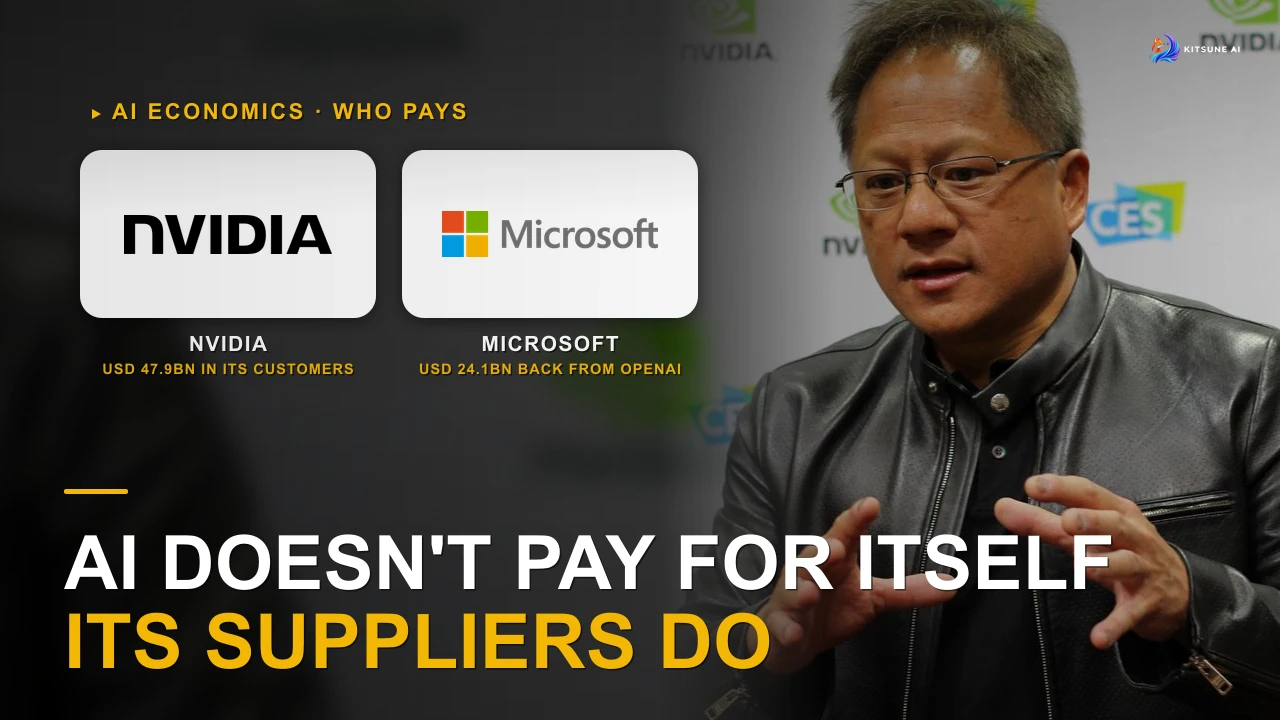
AI is not paying for itself. Its suppliers are, and they are booking it as revenue.
Microsoft has committed USD 13.0bn to OpenAI and booked USD 24.1bn of revenue from OpenAI in a single financial year. Nv
Read article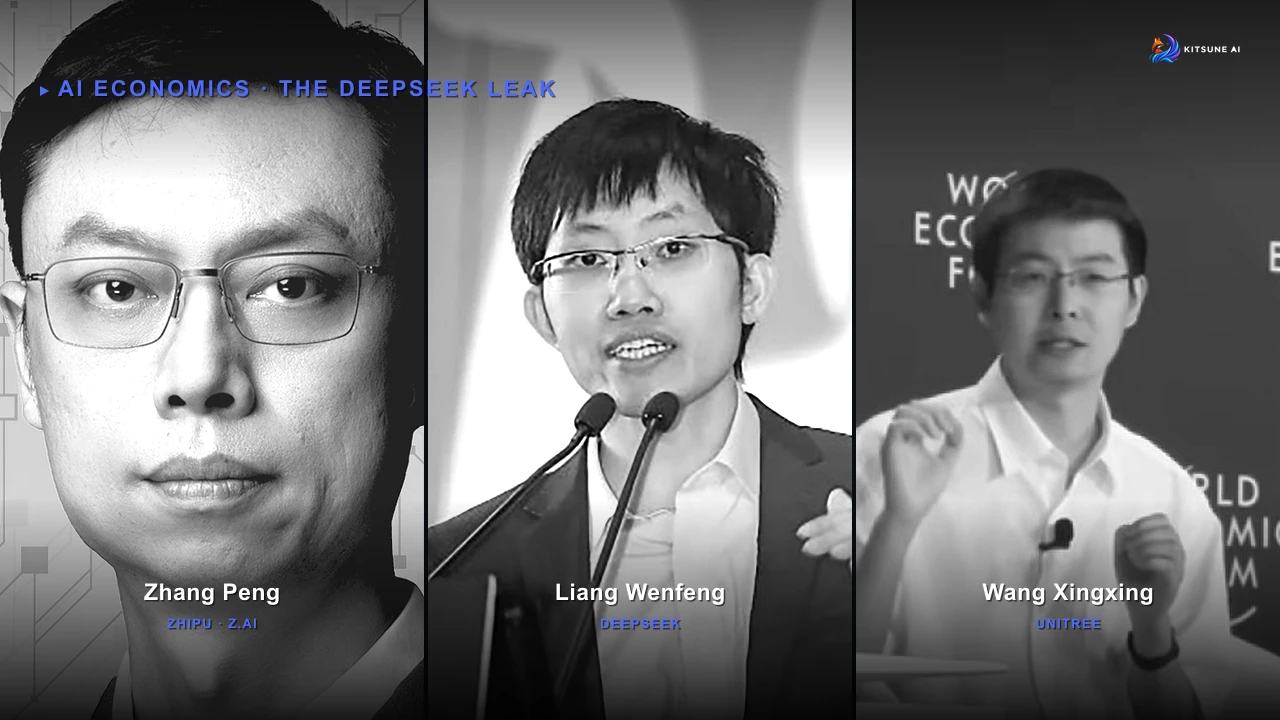
Who wins when intelligence is so cheap it might as well be free?
Intelligence gets cheaper every month, and DeepSeek's leaked shareholder tape shows why that never reverses. Selling int
Read article