
Customers ask AI in voice, and your brand loses the AI reco
“Yaar, raat bhar chalaun toh bill kitna aayega?” Nobody talks to a phone in catalogue headings. I put the Karachi version of that question to Google. It had four ACs to sell me and no answer in rupees. If I ran one of those brands, I’d want to know who gets the next question.

- A Roman Urdu buying question put Gree first and Haier second. Google picked a specific Haier range. A brand tracker would give Haier credit whichever model it named.
- A creator’s TikTok, a customer group and a YouTube video all showed up. Buyers can leave the brand’s orbit without ever leaving the answer.
- At Kitsune, we use AI Recommendations Engineering (AIRE) to follow the buyer from the first question to a product a dealer can actually sell. A mention is a poor place to stop counting.
A Karachi retailer can buy “1.5 ton inverter AC” as a keyword. Try buying “the room under the roof gets hot, my kids sleep there and I’m scared of the July bill.” That second customer has given you more to sell against than the first. Most product pages have less to say to them.
Here’s the question we put to Google AI Mode on November 13: “Karachi mein raat bhar AC chalana hai. Bill kam rakhna hai. Kaunsa 1.5 ton inverter loon?” We typed it as someone might say it. That let us look at what Google recommended once it had the words. What a phone hears through the mic is a separate test.
Four recommendations. Who gets the trip to the dealer?
Gree Airy came first. Then Haier Thunder T3 Plus, Dawlance Hyper T3 and Midea Xtreme or Titan. Google gave Haier a hearing on low bills and after-sales service. It wanted to know the room size, whether the roof gets direct sun, the budget and whether we’d pay cash or in instalments. Those are good questions. The one the customer came with was still open: what would it cost to sleep with this thing on?
Haier has information that could move the conversation along. Its Pakistan specification for a different 1.5-ton model, the HSU-19HFCP/023WDC(W), gives a cooling input range of 0.52 to 1.89 kW. That tells me why a single rupee figure would be a lousy promise. It also tells me exactly why the model number matters. I can’t take the figures from that page and use them to sell the Thunder. To a marketing dashboard, both products spell H-a-i-e-r. To the person paying the electricity bill, they’re two different purchases.
The same answer turned up a Mastech TikTok, a question in the Voice of Customer group and a PakRef video. Imagine you’re the product manager for the other Haier model. You’ve paid for photography, dealer displays and a summer campaign. A buyer types an unbranded question. Another Haier gets named and three outsiders get a chance to explain the category. Your weekly report will say the brand showed up. What exactly are you celebrating?
A buyer can switch languages in the middle of a sentence. Can your brand follow?
“Bill kam rakhna hai” carries the buying criterion. “Raat bhar” tells you when the machine will run. “1.5 ton inverter” supplies the category in English. A brand that translates its English page into formal Urdu can still miss the customer in both languages. Ask your sales team what people call the product in a WhatsApp voice note. Now look for those words on the page the dealer sends back.
There are two places to lose that customer. First, the phone has to hear the right words. Researchers at UET Lahore studied conversational Urdu mixed with English because a system trained on people reading Urdu is a poor stand-in for people talking to each other. Then search has to find the right material for the words it heard. In a Roman Urdu retrieval study, a multilingual model roughly doubled recall in the first ten results compared with matching the words alone. That was a research benchmark. The useful lesson for a brand is where to look when a buyer says one thing and a machine sells them another.
Google accepts both spoken and typed questions in AI Mode. I'd put the same question through both on a customer’s phone. If the transcript drops “raat bhar”, rewriting the warranty page won’t bring it back. If the transcript is right and the answer sells a competing AC, the microphone has done its job. It’s our turn.
I’d take the prompt to the trade team before I bought another impression
In Visa’s Pakistan shopping study, 82% of respondents said they had used AI to help shop, but only 42% said they would trust an AI agent to check out. That gap is where the commercial work is. The dealer may still collect the money. By the time the customer walks in asking for a Thunder, somebody else has already narrowed the shelf.
That is the question behind AIRE at Kitsune: who earns a place on that shelf, for which customer, and on whose evidence? For an AC maker I’d start with the questions dealers hear before somebody asks for a price. Keep the follow-ups together. A buyer who says the bedroom is on the top floor has changed the brief. Record which model survives that detail, which source vouched for it and whether there’s a dealer in Karachi who will stand behind the answer. Run it in the language the customer used. Otherwise the English marketing team can report a win that nobody at the counter would recognise.
Say the AC that actually fits the room is missing. The product team can publish a measured overnight example for that model, with room size, thermostat setting and units consumed. The dealer can put the same model number against its price, stock and installation terms. A reviewer with a meter can test the claim independently. Then ask the original question again, with the same follow-up. Did the right model enter the shortlist? Does the answer now explain why? Save both answers. That’s a change worth taking into a sales meeting.
The buyer has already done the hard part for us. They told us where they live, how they’ll use the product and what worries them about buying it. If all the brand can say back is “1.5 ton inverter”, the most useful salesperson in that conversation is going to be somebody else.
eRetail seasons dry up as brands back out of discounting
Under Armour and Nike are rebuilding around fewer promotions and more full-price selling. The customer habit those sales
Read article
Walmart is making the grocery brand choice before shoppers do
Walmart’s $35 holiday basket fixes the total, selects the brands and puts the recipe beside the cart. The price is a use
Read article
SBP and fintechs should abandon QR payments
At a counter, a customer is ready to pay. A QR sign sends them into a camera, an app and a recipient check. SBP and fint
Read article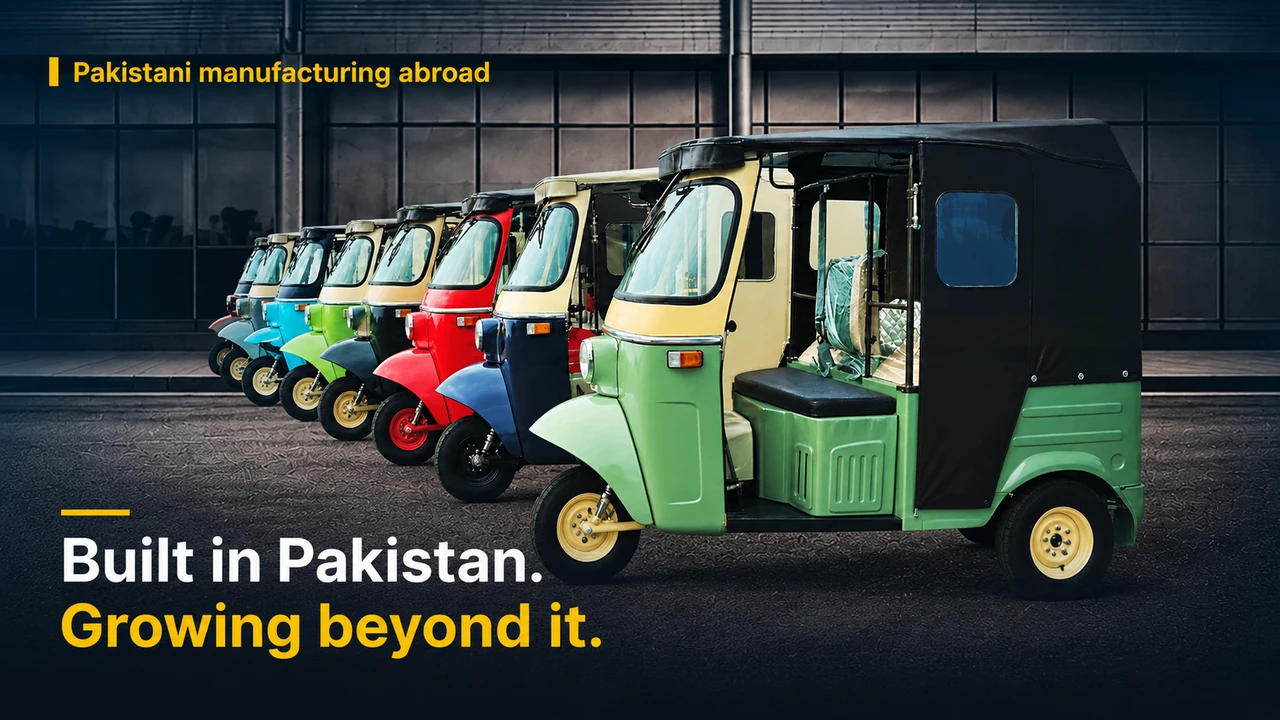
Sazgar is taking Pakistani manufacturing abroad
After building three-wheeler and electric-vehicle manufacturing in Pakistan, Sazgar has opened its first overseas plant
Read article