
Nobody built it, so nobody can fix it
McKinsey counted 27% of enterprises skipping software purchases because agents can build it in-house. One day later, Reuters showed Meta walking that exact future back. My read: the scurry back to real engineers and deployable software has already started.

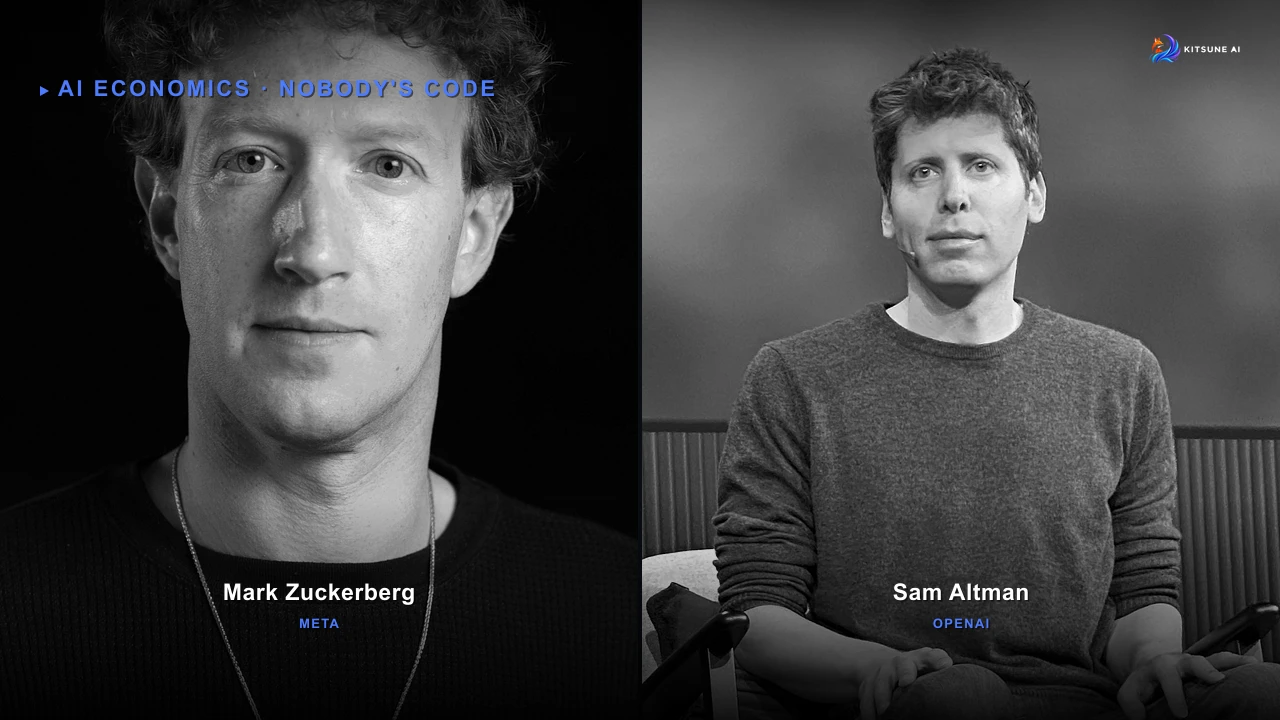
- Meta planned to cut some teams by 60% on the back of agentic coding, then shelved the plan. Reuters found the numbers: code changes up 220% year over year, shipped product up only 36%, incidents up 40%.
- One day before that story broke, McKinsey's State of AI 2026 reported 27% of enterprises now skip software purchases and let agents build instead. Most of that 27% is holding Meta's problem without Meta's engineering bench.
- The tools ship broken product: Lightrun's survey of 200 enterprise SRE leaders found 43% of AI-generated code changes need debugging in production after passing QA. Zero respondents called themselves very confident in AI code once deployed. Zero.
- My wager: within a year the loud enterprise story is the scurry back, to deployable software and to the engineers everyone cut. Code nobody built is code nobody can fix.
Meta ran the experiment at full scale, then pulled the plug
On August 25, McKinsey told everyone the water was fine: 27% of enterprises have decided against buying software because agentic coding tools can build the thing in-house. The next morning, Reuters published what the water actually did to the one company that swam furthest out.
Meta called it Project OT. Sketched at a January leadership retreat at Zuckerberg's Hawaii estate: an "AI native" company, agents doing the daily work, some teams cut by as much as 60% in two waves, humans regrouped into small pods of general-purpose "builders." Then Meta looked at its own dashboards. Code changes to its AI platforms were up 220% year over year. New features actually reaching users: up 36%. Technical and security incidents: up 40%, with employee time spent firefighting them up 70%.
Zuckerberg killed the second wave. His own words: "The trajectory of the agentic development over at least the last four months hasn't really accelerated in the way that we expected."
Meta printed code. It could not print understanding. Triple the code, a third more product, and a fire alarm that never stops ringing. That is the full-scale result, from the company with the deepest engineering bench on the planet and every incentive to make the story end differently.
The 27% just bought Meta's problem without Meta's bench
Now go back to McKinsey's 27%, because the survey hides the interesting part. Among firms over $1B in revenue, agent programs running at scale jumped from 27% to 40%. Enterprise-level profit impact from AI: stuck at 37%, the exact same figure as last year. McKinsey's own verdict: "Organizations' conviction in AI is growing faster than the immediate financial returns they can attribute to it."
The 27% read their agent demo as a free lunch. Skip the license, skip the vendor, let the agents build the approvals tool over a weekend. And on day one they are right. The tool works, the invoice dies, the CFO gets a slide.
Here is what I think day ninety looks like, and this part is opinion, so weigh it against my vantage as an operator who builds agentic systems for a living. Meta had thousands of engineers who could open the hood when the 40% incident spike hit, and it still retreated. The mid-market company that deleted the license AND never had the bench has no hood-openers at all. It has a pile of code that passed the demo, written by a tool, prompted by a manager, reviewed by nobody.
The tools ship broken product, and nobody can see where
This is the part the build-it-yourself crowd has not priced. Most AI coding tools ship broken product, and the breakage is invisible until production finds it for you.
Lightrun surveyed 200 senior SRE and DevOps leaders at enterprises with 1,500+ employees: 43% of AI-generated code changes need debugging in production AFTER passing QA and staging. Developers now burn 38% of their week, roughly two days, debugging AI-written code. And when a fix ships, 88% of teams need two to three redeploy cycles just to confirm it worked.
CloudBees found the same shape from the other side: 92% of enterprise tech leaders were confident their code was production-ready. 81% then watched production issues rise with AI code adoption. 69% cite security vulnerabilities introduced by AI-generated code.
Call it nobody's code: software nobody wrote, breaking in ways nobody can find. When a human builds a system, the debugging map lives in a person. You walk to their desk, they say "check the queue handler, I always hated that part." When an agent builds it and the builder-of-record is a prompt, that map does not exist. In Lightrun's survey, 74% of financial services teams fall back on tribal knowledge to diagnose incidents. Tribal knowledge of code no tribe wrote.
The loneliest thing in software used to be a stack trace in a codebase whose author left the company. At least the author existed.
The cleanup crew has already been hired
If you want to know how this movie ends, watch what the sellers are buying. On August 13, OpenAI signed IBM: a dedicated OpenAI Practice, thousands of consultants and engineers certified to deploy GPT-5.6, Codex and ChatGPT Work inside enterprises. IBM Consulting's Andy Baldwin, in the press release: "The challenge is not access to AI technologies." The challenge, he says, is integrating AI securely, at scale, into complex enterprise environments.
Read that as a confession. OpenAI can see, better than anyone alive, what its own tools ship into companies. It just bought thousands of human engineers to stand between its models and production. The deployment army I wrote about in June is real, and it is exactly the bench the 27% think they no longer need. The bill on AI coding was always coming due; Meta just paid it in public.
The agents are staying. The orphan code doesn't have to.
The obvious counter: agentic coding is real, and I should know, my company ships agentic systems. The 27% did not hallucinate the savings, and some of them, the ones with real engineering depth, will build things a vendor never could. True. Concede it fully.
But the dividing line in the next two years will run somewhere very different from build versus buy. It runs between software somebody on your payroll understands under the hood, and software nobody does. Deployed and deployable beats generated and abandoned, every time it matters, which is always at 3am.
So before you skip the renewal, ask one question: when this thing breaks, who in my building opens the hood? If the answer is a name, build it, own it, enjoy it. If the answer is a vendor, keep renting without shame; Meta scurried back and so can you. And if the answer is nobody, you have not cut a cost. You have adopted an orphan. Nobody built it. Nobody will fix it.
Common questions
What did Reuters report about Meta's agentic coding plan?
Meta planned to cut some teams by as much as 60% on the back of agentic coding, then killed the second wave. Code changes to its AI platforms were up 220% year over year, new features reaching users were up 36% and technical and security incidents were up 40%.
How reliable is AI-generated code in production?
Lightrun's survey of 200 senior SRE and DevOps leaders found 43% of AI-generated code changes need debugging in production after passing QA and staging. Developers spend 38% of their week, roughly two days, debugging AI-written code, and zero respondents called themselves very confident in AI code once deployed.
Should enterprises skip software purchases and let agents build it in-house?
McKinsey's State of AI 2026 found 27% of enterprises now skip software purchases and let agents build instead. The test is who in the building opens the hood when it breaks. If the answer is nobody, the company has adopted an orphan.

The AI industry just stopped chatting and started billing
For three years the question was which model is smartest. The money just changed it to which agent earns its keep.
Read article
AI coding bill Is coming due
For two years the pitch was that AI writes the code so you stop paying for developers. Gartner just put a date on when t
Read article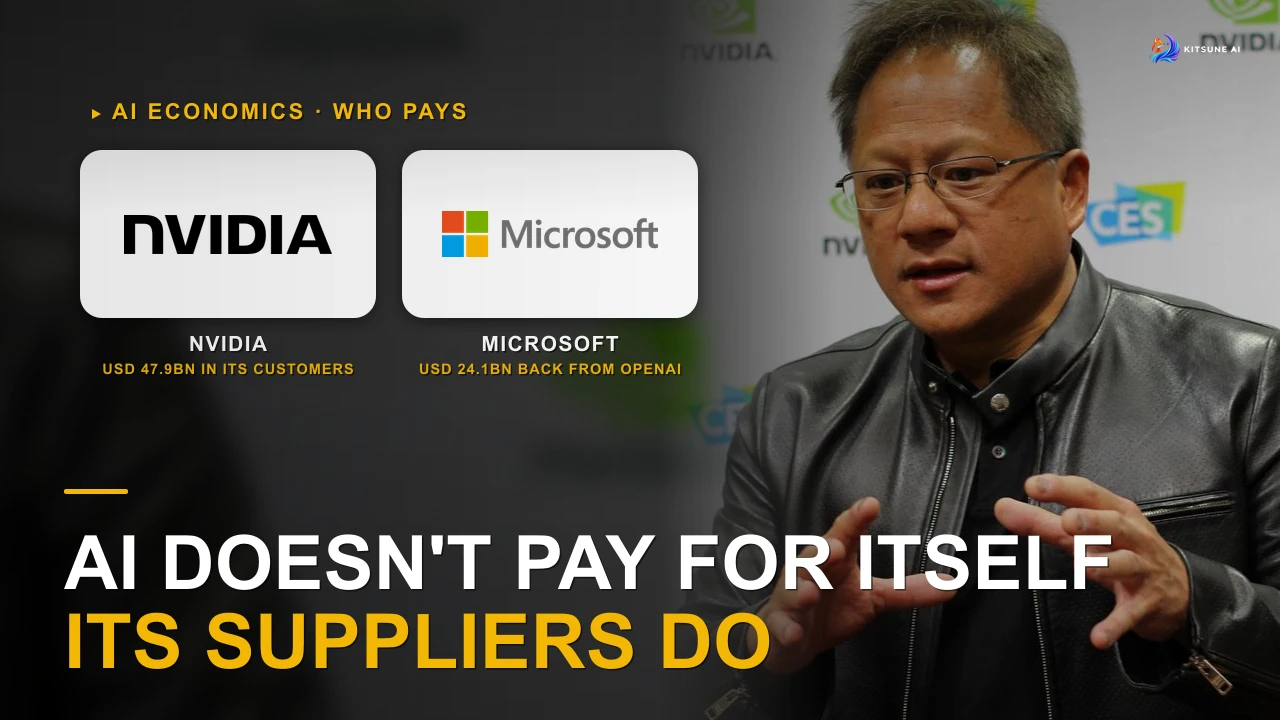
AI is not paying for itself. Its suppliers are, and they are booking it as revenue.
Microsoft has committed USD 13.0bn to OpenAI and booked USD 24.1bn of revenue from OpenAI in a single financial year.
Read article
Frontier Labs are investing into Forward Deployment because AI doesn't work on its own.
For two years, the pitch to boards was that software was autonomous. Buy an API key, stream tokens, and your business transforms overnight.
Read article