
Marketers think they run the company. And yet, they've been booted off all FTSE100 boards.
I left marketing. Not because I stopped being good at it, because I could not see a future in it. Yesterday a study counted the marketing directors on the main board of every FTSE 100 company and found none. In 2007 there were fourteen. In between, Meta and Google took the buying, the labs took the making, and finance took the argument.

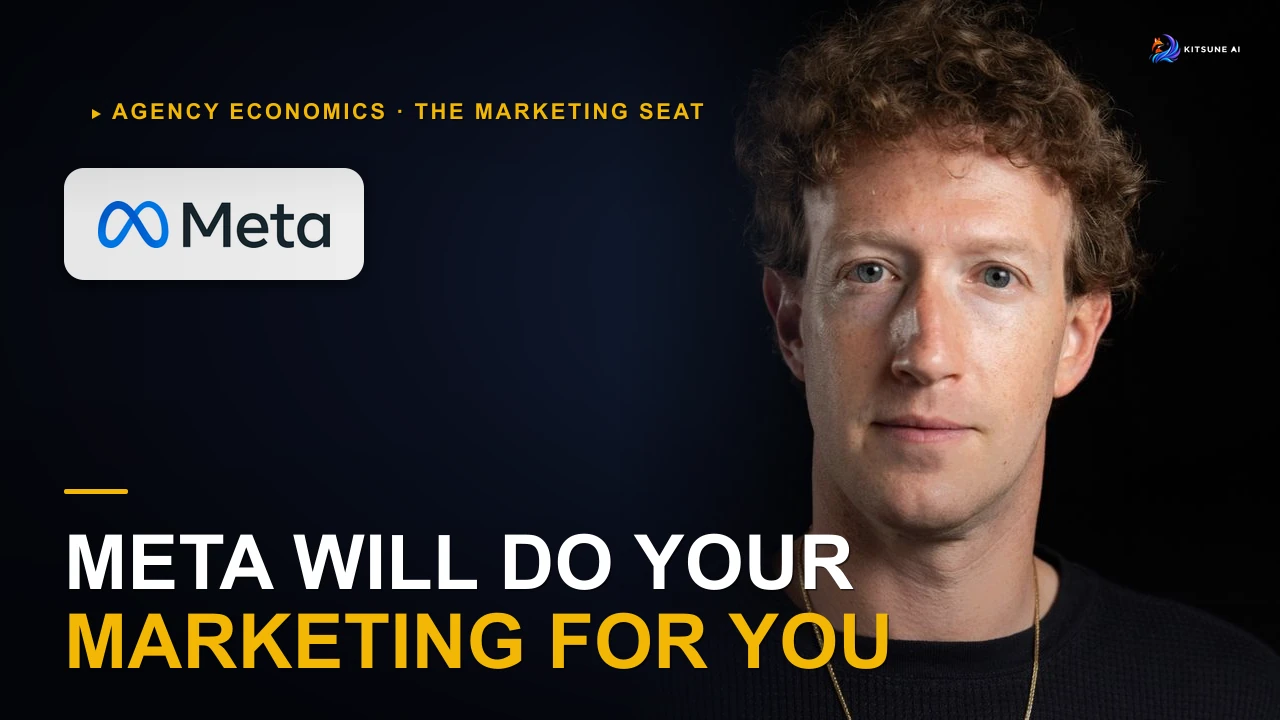
- The Marketing Directors counted the FTSE 100 on 18 September and found zero CMOs on any main board. Cranfield counted fourteen in 2007.
- Mark Zuckerberg described the job being deleted, on a stage, in May 2025: give Meta an objective, "connect their bank account, and then we just deliver as many results as we can". Advantage+ is now at a USD 75bn annual revenue run rate.
- OpenAI's ads business hit a USD 1bn annual run rate about 200 days after its first ad. Google's AdWords took four years to do that.
- Coca-Cola's AI Christmas film cost about the same as a normal one. What collapsed was the year it used to take, down to a month, and the department that used to do it.
- Marketing's budget has flatlined at 7.8% of company revenue, and the agency's share of that budget is 19.2% on its way to 15% by 2030.
I left marketing. I want to be straight about why, because it was not burnout and it was not a better offer. I looked at the next ten years of the job I had spent twenty-two years learning and could not find the part where it still mattered.
I sat on both sides of the pitch table for more than a decade. Agency side at MediaCom, GroupM and Publicis. Client side running media budgets north of PKR 5bn a year at Nestle Pakistan. Across Pakistan and Southeast Asia I took part in pitches worth more than USD 200mn of billings, for FMCG and cement, e-commerce and banking, tyre manufacturers, shoe retail and beauty. Very few people have watched that many companies decide what marketing is worth to them, from both chairs, in that many categories.
Here is what I learned doing it. Marketing believes it is the centre of the table. It gatekeeps everything, the brand, the agency roster, the creative sign-off, the guest list. And when the real question gets asked, which is how much of the company's money this function should get and what it returns, marketing is not in the room. It sells itself for whatever finance will pay, and calls the discount a partnership.
Fourteen to zero in nineteen years
The Marketing Directors published the count on 18 September. Not one FTSE 100 company has a CMO, chief customer officer or chief growth officer on its main board. Cranfield's Professor Malcolm McDonald counted fourteen in 2007, back when those companies sold less online and nobody had yet written a first-party data strategy.
The study also carries the numbers marketers will reach for to argue with it, and those are the confession. Seventy percent of those boards are credited with meaningful marketing, customer and brand expertise. Forty-five percent have somebody with a marketing background beyond the chief executive. Read what that actually describes. A non-executive director who ran a brand somewhere two decades ago counts. A chief executive who once did a stint in marketing counts. What does not exist, in any of the hundred largest companies in Britain, is a director whose job today is the customer and who can be held to it in the room where the money is voted on.
The study says it itself, politely. Guy Tomlinson of The Marketing Directors: a chief marketing officer "can therefore have significant responsibility for strategy, investment, customer experience, brand and commercial performance without being a statutory director of the PLC." Responsibility without a vote is the definition of a supplier. Every marketer reading this has sat in that meeting and mistaken being consulted for being in charge.
America is further down the same road and uses a plainer word for it. Nearly three in ten of the Fortune 500 now have nobody in the C-suite whose title says marketing. UPS scrapped its standalone CMO in December 2023 and folded the work into a chief commercial and strategy officer. Etsy did the same weeks later and put marketing under its chief operating officer. Walgreens lost its CMO in a layoff round and never replaced her. In each of those the function survived and got moved underneath somebody who carries a number, which is the corporate way of admitting it was never senior in the first place.
Zuckerberg described the job being deleted and the industry clapped
In May 2025, at Stripe Sessions, Mark Zuckerberg was asked where Meta's advertising was going. His answer is the clearest description of the marketing job ending that anyone has given, and he gave it to a room of payments executives rather than to us.
"Any business can come to us, say what their objective is, we get new customers to do this thing, or sell these things, tell us how much they're willing to pay to achieve those results, connect their bank account, and then we just deliver as many results as we can." He added that Meta would "come up with, like, 4,000 different versions of your creative and just test them and figure out which one works best."
Count what he removed. The brief. The targeting. The media plan. The creative. The testing. The optimisation. Everything a media agency charges for and most of what a brand team does. What is left for the marketer in that sentence is an objective, a number and a bank account.
He was not speculating. On Meta's second-quarter call this year Susan Li reported Advantage+ at "over $75 billion in annual revenue run rate," with over 9 million small businesses using at least one of Meta's AI creative tools. Google has been pushing advertisers into Performance Max and now AI Max, where placement and targeting are the machine's decision and the advertiser sees a report afterwards. I built GSK's programmatic buying framework in Malaysia. The entire value of that work was choosing where the money went. That choice is now a setting.
OpenAI did in six months what AdWords took four years to do
Then the new entrant. OpenAI put its first ad inside a ChatGPT session in February and reported a USD 1bn annualised run rate about 200 days later, with tens of thousands of advertisers and self-serve now open across Europe, India and the Middle East. Google's AdWords took four years to reach USD 1bn. OpenAI took about six months, and it is targeting USD 2.5bn for the year.
On the making side, ByteDance shipped Seedance 2.0 on 10 February and said out loud what it is for: professional film, e-commerce and advertising production, faster and cheaper. It takes reference images, video and audio, generates its own sound, and produces multi-shot scenes. It went viral in China for looking like cinema.
So the buying is automated by Meta and Google, the answer layer is being sold by OpenAI, and the film is being made by a video model owned by the company that also owns TikTok. Three of the four things a marketing department does have a vendor who does them without the department.
The craft got commodified before the budget did
Here is the detail that should worry a marketer more than any of the above, and it is the one nobody quotes properly.
Coca-Cola made its Christmas film with AI for the second year running. The reporting on it has a number in it that everyone skipped: the money was roughly the same as a conventional production. The saving was time, about a year down to about a month, and people. A crew of fifty-plus became around twenty AI specialists, with roughly a hundred people reviewing something like seventy thousand generated clips to find the usable ones.
Read that as a buyer. The client did not get a cheaper ad. The client got the same ad, eleven months sooner, without needing the people who used to make it. The value did not move to the advertiser. It moved away from the craft. Anyone whose position rests on being the one who knows how the work gets made has just watched the work get made by twenty people and a review queue.
That is what commodified means, and most marketers still think it is a word about cheaper media rates.
Finance won an argument marketing refused to have
Meanwhile the money stopped growing. Gartner's 2026 survey, 401 marketing leaders at companies mostly above USD 1bn of revenue, puts marketing at 7.8% of company revenue against 7.7% the year before. Flat. Inside that flat number, Gartner's Jay Wilson puts agency fees at 19.2% and heading for 15% by 2030. A shrinking share of a flat budget.
The agencies are already paying for it. WPP has cut close to 11,000 roles since the start of 2025, 1,267 of them in the first half of this year with another 1,000 planned, taking headcount to 97,388 by the end of June, down 6.4% in a year. Omnicom cut more than 4,000 after closing the USD 13bn IPG deal, on top of about 3,000 the year before.
And the room changed. Digiday reported in March that the CFO has moved upstream into conversations that used to be marketing's alone. Liz Yoselowitz of Brainlabs described it exactly: "The brief comes in through marketing, but the real qualifier in the room is often finance." Gary Vaynerchuk was less kind and more correct: marketers "have spent years hiding behind metrics that flatter the work while the business declines."
We wrote in July about PepsiCo ending the era of procurement in marketing. That was the good version, where a client takes the work seriously enough to restructure how it buys. The common version is the one I watched for a decade. Procurement runs a pitch, marketing writes a brief it has no authority to fund, and the winner is whoever discounts hardest. I have been the person discounting and I have been the person accepting the discount, and neither of those people had a board seat.
Go to your last Cannes
So go. Enjoy the party you threw to show your chief executive that you can gather some attention around yourself. We wrote about Cannes this morning, about a festival that caught one agency faking a case film and now checks everyone's paperwork, which tells you how much confidence the industry has left in its own evidence.
While you are there, do the count. Meta automated the buying and told you in 2025. Google made the placement a setting. OpenAI built a billion-dollar ad business in six months. ByteDance will make the film. Finance already has the seat you thought was yours, and procurement has the pen.
I left because I did the count early and did not like the answer. The people still in it have a narrower job than the one they think they have, and a shorter run at it than the four years the tenure studies give them. The ones who will still be employed in 2030 are the ones who can stand in front of a CFO and show what the money did, in the CFO's language, without an agency in the room to hide behind.
PepsiCo just ended the era of procurement in marketing
$5.4 billion of marketing moved to Publicis without a pitch. Microsoft did the same in April, Coca-Cola a year before th
Read article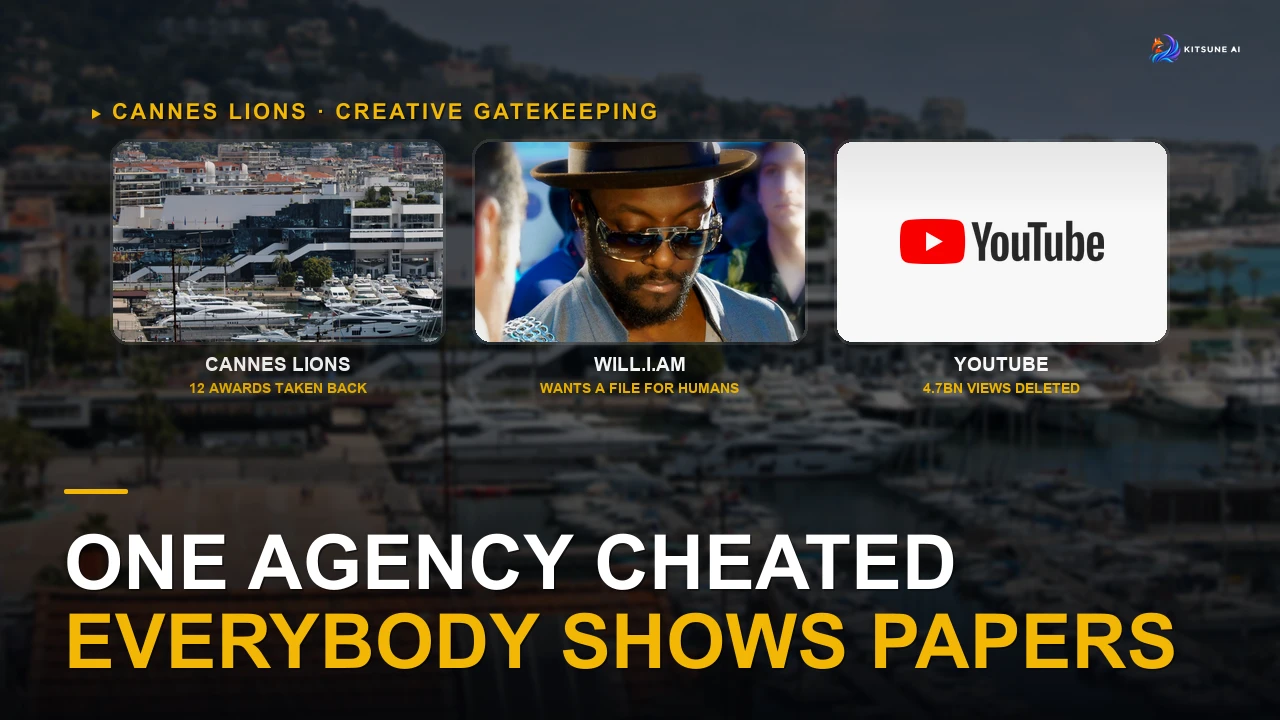
Cannes is back to being the gatekeeper of creatives
DM9 faked CNN Brasil footage in a case film and Cannes took back 12 awards. It was right to. Then came the integrity han
Read article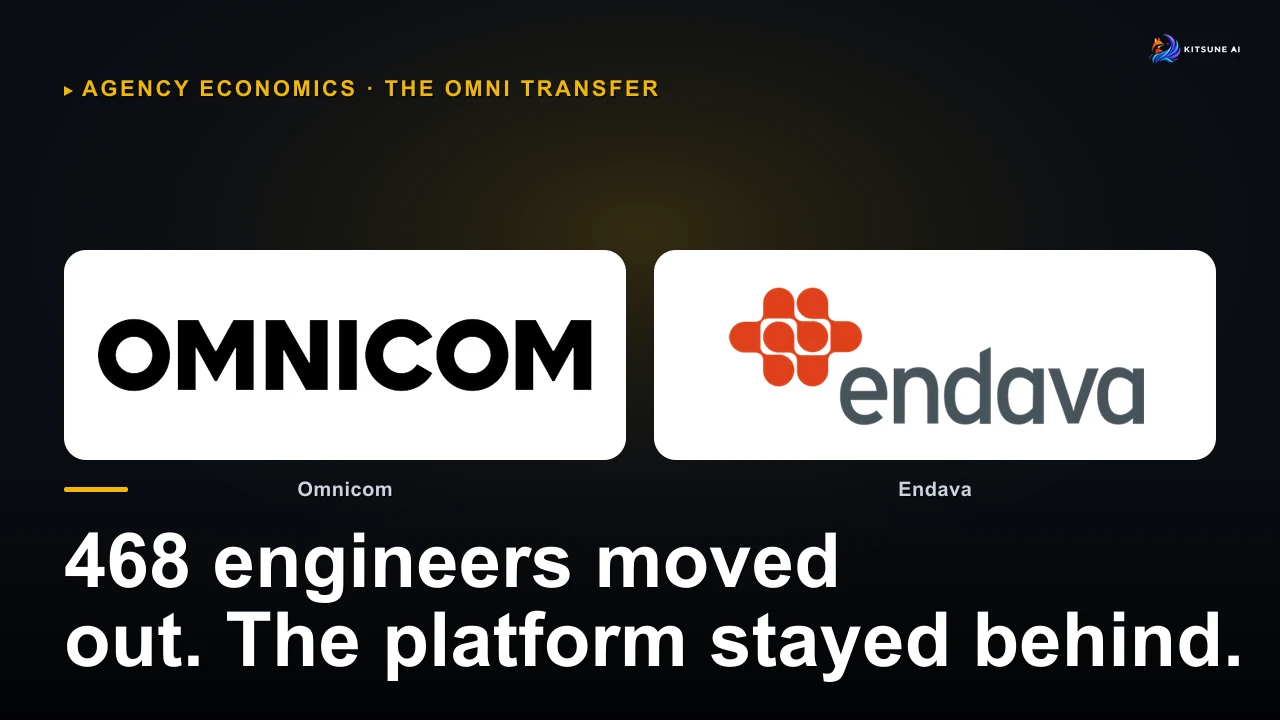
Omnicom admits it can't build AI, passes Omni to Endava
Omnicom told the market Omni would carry the group's future. It spent years, hundreds of millions of dollars and more th
Read article