
Google’s real target is the price on Nvidia’s next invoice
Google’s TPU strategy is about becoming a real second source for AI compute. One workload moved at the right price can change a renewal while Nvidia keeps most of the fleet.

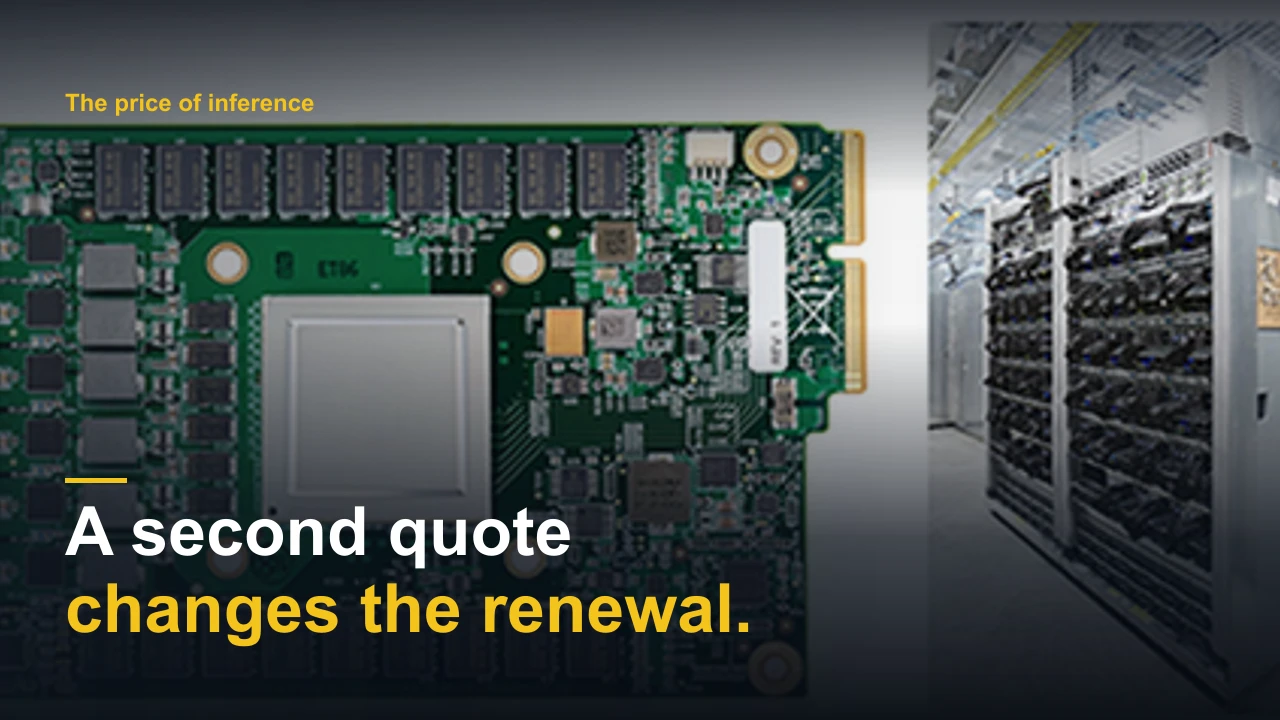
- Google is extending TPUs from internal and cloud use into packaged systems for customers’ own data centres.
- Its latest portfolio matches different chips and systems to training, reasoning, confidential inference and long-context work. TorchTPU lowers the first PyTorch barrier.
- Anthropic’s SEC filing shows what buyer power looks like at scale: a proprietary layer that routes work across AWS Trainium, Google TPUs, Nvidia GPUs and AMD GPUs. Anthropic says that took years and significant investment.
- Google can change the price of an Nvidia renewal by making one costly job practical to move. Run that job on Google’s chips, include the engineers and weeks needed to switch, and take the second quote into the negotiation.
- Compare cost per accepted job, quality, latency and migration effort. A chip-hour rate alone cannot settle the decision.
Google does not need Nvidia’s whole account. One expensive workload that runs elsewhere can make a second bid credible and change the next renewal before the market-share chart moves.
Google has designed custom silicon for its own workloads for more than a decade. Now it wants customers to buy that design as cloud capacity, systems installed in their data centres and software that eases migration.
Google is selling the computer around the chip
On November 9, Google added two systems to its eighth-generation TPU family. TPU 8tx targets confidential inference. TPU 8i Max pairs chips for very long-context jobs. Across four systems, Google targets training, reasoning, secure inference and large context windows. Those are supplier claims about intended workloads and performance, not evidence of lower costs on a buyer’s job. Google’s TPU announcement lays out the strategy.
The sales route is changing too. Alphabet’s third-quarter filing says Google Cloud product revenue comes primarily from TPU systems bundled with software, installation, support and warranties. It has signed a limited number of deals for specialized, high-scale jobs in customers’ data centres. Revenue recognition began in Q2, with most expected in 2027. The channel is real but still small, and the filing gives no customer names or Nvidia comparison.
Software is part of the offer. Google says open-source TorchTPU lets PyTorch workloads run natively on TPU, with support for vLLM and SGLang. That lowers the first barrier for teams already using those tools. It does not mean production runs at the same speed, quality or reliability without tuning. Google’s TorchTPU announcement describes the path. Buyers still need to check performance against their traffic and acceptance criteria.
Anthropic shows what a real second source takes
Anthropic’s November 10 SEC filing gives the clearest buyer evidence. The company says it trains and serves Claude on AWS Trainium, Google TPUs, Nvidia GPUs and AMD GPUs. Its own orchestration layer routes work for price and performance. Anthropic says that flexibility took years and significant investment. This validates the multi-chip strategy and reveals its cost. Anthropic’s filing is the buyer’s account, not a Google case study.
The same filing separates a Google Cloud hosting commitment from additional TPU procurement. Anthropic reports at least $121.3 billion in spend under its Google Cloud agreement between 2026 and 2033, regardless of actual usage. Separately, it estimates $125 billion to $150 billion in future payments for additional TPU compute expected between 2028 and 2031. That second figure is not a fixed-dollar order to Google. Anthropic lists several possible routes: Google Cloud hosting, direct purchase from Google, or purchase or lease through a third-party TPU provider. The delivery method and eventual payment depend on capacity and financing.
That distinction matters. The filing puts TPU compute into a leading buyer’s plan. It does not prove the estimate will become Google revenue, that every buyer can get these systems, or that Google matches Nvidia’s price on an equivalent workload.
A benchmark becomes bargaining power only when it can move
Google’s public rate card lists older TPU v6e at $2.70 per chip-hour on demand in two US regions, with lower rates for scheduled capacity and longer commitments. The new systems have no public rate there. A chip-hour is not the cost of an accepted answer or a completed training run. Google’s pricing page shows how region, availability and purchase mode affect the rate.
I would compare both systems on one costly, repeatable job. Hold the model, inputs, output quality and latency target constant. Count accelerator time, idle capacity, storage, networking and the engineers needed to port and support the second stack. Price each accepted result, including the cost of keeping both systems ready. A theoretical saving eaten by months of engineering is a weak card.
Anthropic can spread the work over a vast compute budget and proprietary routing layer. For a smaller buyer, building the same capacity is a major engineering project. That is the limit on Google’s pitch. A public rate and open software help a buyer ask for a quote, but only an alternative ready for its traffic can change Nvidia’s terms.
My buying rule is simple: test before the renewal, and negotiate with measured cost per useful job. Google wins when its system runs a workload well enough to become a credible option. Nvidia can keep most of the fleet and still face a better-informed buyer.
The customer to watch may renew with Nvidia at a lower price. That’s a competitive win for Google that a chip market-share chart would miss.
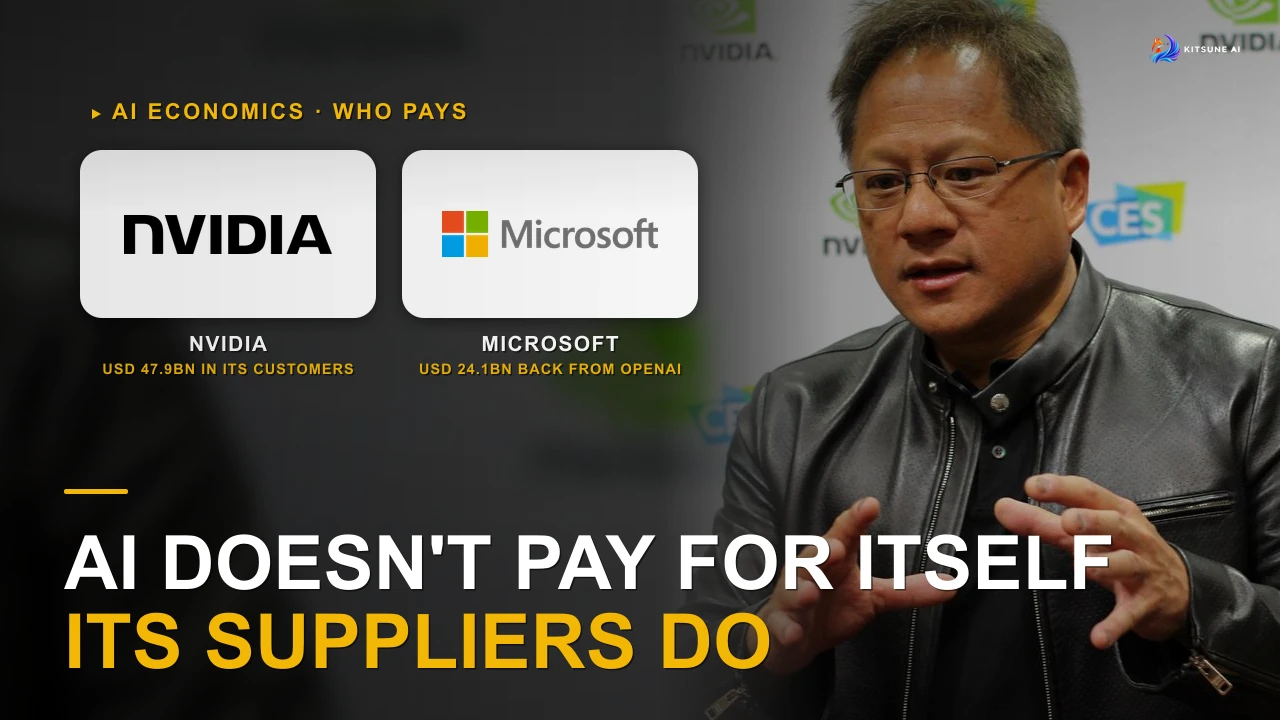
AI is not paying for itself. Its suppliers are, and they are booking it as revenue.
Microsoft has committed USD 13.0bn to OpenAI and booked USD 24.1bn of revenue from OpenAI in a single financial year. Nv
Read article
Has Elon Finally Assembled the AI Equivalent of a Royal Flush With the Cursor Acquisition?
SpaceX buying Cursor looks like one more shopping-spree headline. Lay it next to the other cards Elon is holding and you
Read article
In 2027, enterprises will pay AI agents for work they can prove is done
The enterprise agent race is shifting from demos to delegated work. Vendors and employees who can make a bounded process
Read article
eRetail seasons dry up as brands back out of discounting
Under Armour and Nike are rebuilding around fewer promotions and more full-price selling. The customer habit those sales
Read article