
Nano-Creators and UGC rising with pay-for-performance models
A famous face on a flat fee is the deal brands are walking out of. Unilever is paying smaller creators a share of the sales they drive, and the invoice data shows why the mega post got too expensive to buy on faith.
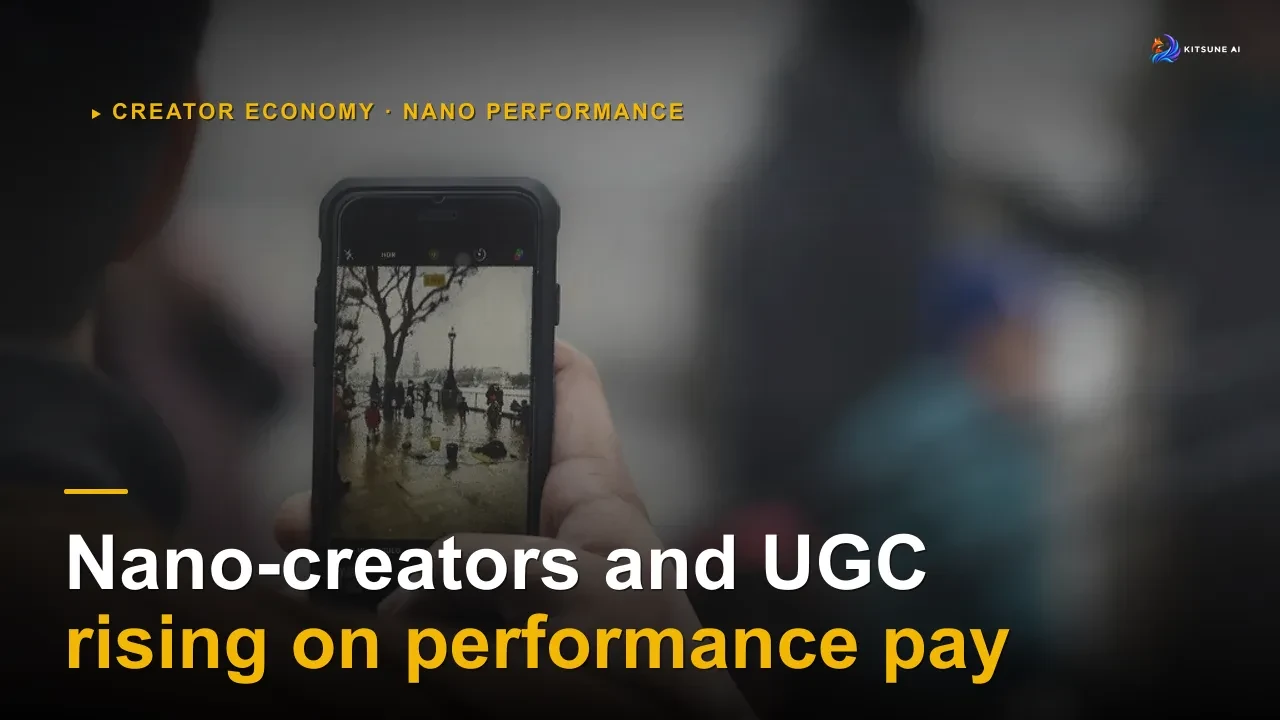
- Leandro Barreto, marketing chief for Unilever's beauty and wellbeing group, at Cannes: working with a creator who has 300 million followers is a different job from working with the 150,000 who have 1,000. Digiday.
- On the second run of Vaseline Verified, the people who first posted the hacks earn 15% of the sales they drive. Barreto has put creator-led work at more than 50% year-on-year ROI growth on some core brands.
- OpenSponsorship priced 1,527 campaigns. Median cost per piece of work: nano $134, mega $2,727. Median cost per engagement: nano $3.11, micro $3.05, mega $5.00. Mega still wins on cheap raw views. Mega loses when the brand is paying for a post that may never sell anything.
- Esi Eggleston Bracey, then Unilever's top marketer: the model is many people speaking for the brand, and a one-off film is the old shape. Marketing Week.
Brands used to buy a famous face for a day rate and hope the audience followed. The ones rewriting the contract now buy a share of what actually moves.
The mega post is a fee for showing up
OpenSponsorship looked at 1,527 creator campaigns and published the medians. A nano creator, under 10,000 followers, billed a median of $134 per piece of work across 146 campaigns. Micro, 10,000 to 50,000, was $150. Mid was $417. Macro was $517. Mega, a million followers and up, was $2,727, and that cell is only 53 campaigns, which tells you how scarce and how priced the top of the market has become. There are fewer of them, and each one sends an invoice before a single sale exists.
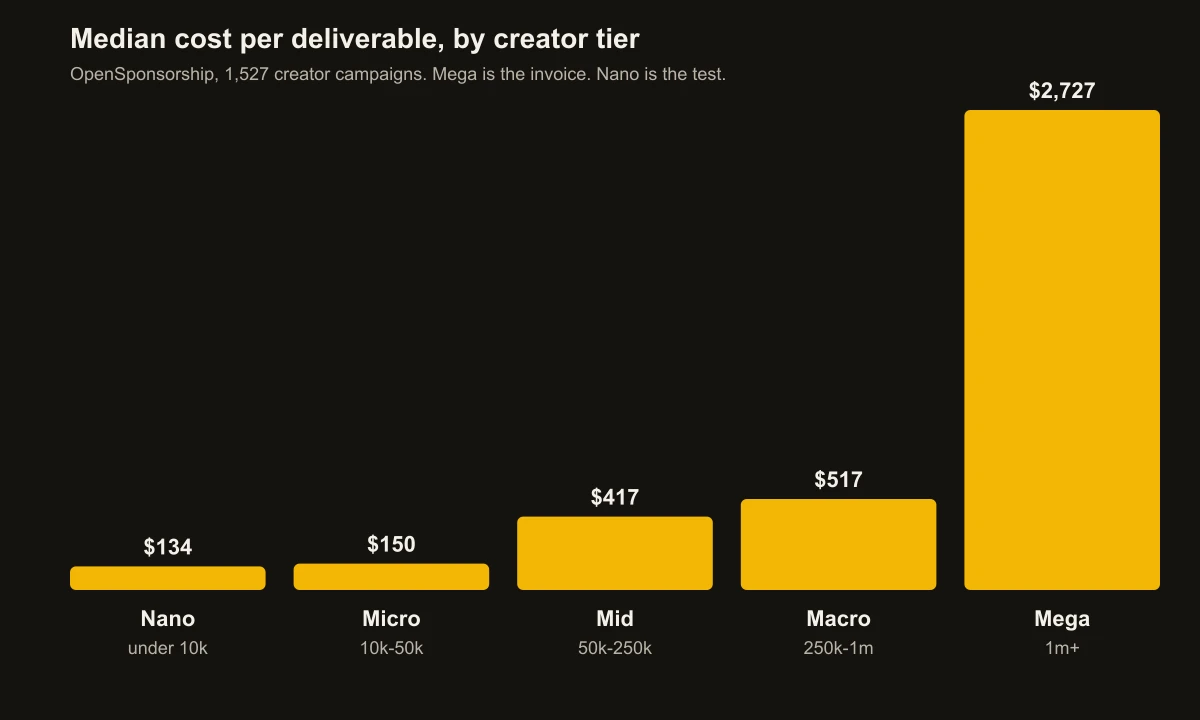
The yellow bar on the right is what a brand pays for the right to post. It sits at roughly twenty times the nano median. When the contract ends the moment the reel goes live, or the moment the creator walks into the event, the brand has bought attendance. Unilever's own people have started saying that attendance is the wrong unit to purchase.
On cost per view, OpenSponsorship's cut goes the other way. Mega delivers the view more cheaply. Nano wins on cost per engagement: $3.11 against $5.00 for mega, with micro at $3.05 and the mid tier the worst of the set at $7.07. The seller's version of this story says small accounts always return more. The buyer's version is narrower. Cheap reach can still favour a large account. A flat fee for a reel or a visit, paid at the mega rate against a sale that may never arrive, is where the math breaks. Performance pay is how a brand refuses that maybe.
Barreto asked who gets paid when the value moves
Digiday sat in Unilever's Cannes roundtable. Barreto said it in one breath. Creators are different trades under one label. A creator with 300 million followers and the other 150,000 with 1,000 followers do not do the same job for the same money. Unilever has been building toward a network on the order of 300,000 creators, up from about 10,000 two years earlier, and a real share of that is nano work aimed at a community, including around sport, where the brief is to stay in the conversation after match day.
The Drum reported the same shift from the agency side. Creator work is being judged on ROI, growth, competitive growth, engagement and sales. A Unilever marketer named Sykes put a number on the good cases: up to 17% gains, and view-through rates at four times when the creator model is actually right. The Vaseline case is the one I would take into a negotiation. People were already posting hacks. Unilever tested the hacks, then went back to those creators and had them co-build and sell a range. Those creators take 15% of the sales they drive. That is a percentage outside the agency fee. The creator gets paid when the product moves, which is the sentence a flat-fee reel never had to survive.
Barreto's question, as DesignRush carried it, is the whole brief. Who creates the value, where is it created, and how does that person get rewarded? If the value sits with the creator, the reward cannot stay a day rate for showing up at a launch.
Bracey, speaking at Cannes and reported by Marketing Week on 18 June, put the operating change in plainer clothes. Use the creator's voice to say the brand. A one-off piece of creative is the old model. Many people talking to many people, on the brand's behalf, is the replacement. She also said the company runs Hollywood deals and hundreds of local nano influencers who talk about one offer in one town. Both can exist. The money is moving toward the second, because the first has priced itself as a media buy with no sale attached.
User footage is the supply line. Performance is the contract
The feed is already full of people filming the product without a brief. Unilever's move is to find that footage, including with machines that catch a mention when nobody used the official tag, and then pay the person who made it when they will stand behind a sale. That is how unpaid user footage becomes a supply line. The creator who posted a hack for nothing is now on 15% because the hack became a range.
A flat fee cannot run at 300,000 people. You cannot brief, revise and bank-transfer that many day rates and still know which post paid for itself. A base plus a bonus on engagement, or a base plus a tracked sale, is how the admin survives and how the incentive points at the product. Affiliate links and tracking codes are ugly. They are also the only reason a finance director believes the line.
I have sat on the buyer side of this. At Nestlé Pakistan the out-of-home and influencer pot was PKR 1 billion. Famous faces were in that pot, and so were smaller people, and the argument in the room was always the same tension: whether the fee was buying real distribution or buying a photograph of attendance. We did not have Unilever's 15% structure on the table in those years. We had the same pressure. A creator invoice that cannot be tied to a sale is a hope, and a PKR 1 billion line item does not get renewed on hope. The brands now writing performance into the contract are doing, in public, the cut I wanted the spreadsheet to force.
If you still price creators the old way, the longer version of that argument is in what brands pay when they do not know the unit.
Big names get expensive when the fee is the product
A mega creator can still open a market. Dove's Crumbl tie-up, in the same Unilever reporting, did 3.2 billion impressions and 53 million video views. Vaseline Verified was reported at a 43% sales lift when the hacks were tested and then handed back to the people who made them. Reach and a sales lift are different purchases. The first can justify a large fee when the job is a cultural spike. The second is why nano creators and unpaid user footage are rising on performance contracts. You can hire two thousand small accounts for the price of one mega piece of work at these medians, and you can pay them when the code gets used.
What is dying is narrower than "famous people." The big name who will only sell a reel, or a visit, or a bundle of usage rights with no path to a sale, is asking to be paid as media that refuses to be measured as media. Barreto is already asking how that person gets rewarded if they did not create the value. The chart says the reward, on a pay-to-play contract, is $2,727 before anyone knows whether a single bottle moved.
Pay for the post and you will keep buying the right-hand bar. Pay for the sale and the work moves to the people who will take a percentage, most of them with audiences a media plan used to ignore.
Brands don't know what to pay creators
A new study finds almost half of marketers are clueless about what they are paying creators for. The problem is on the b
Read article
AI has made outreach cheap, and PR expensive
Anyone can send 10,000 emails in an afternoon. Journalists do not answer. The retainer still bills you for the hours. Th
Read article