
And insider's look at B2B Content Marketing
Most brands treat content as a succession of posts and campaigns. Their customers encounter it as one company. The story needs to hold together as it moves between platforms, formats and conversations.

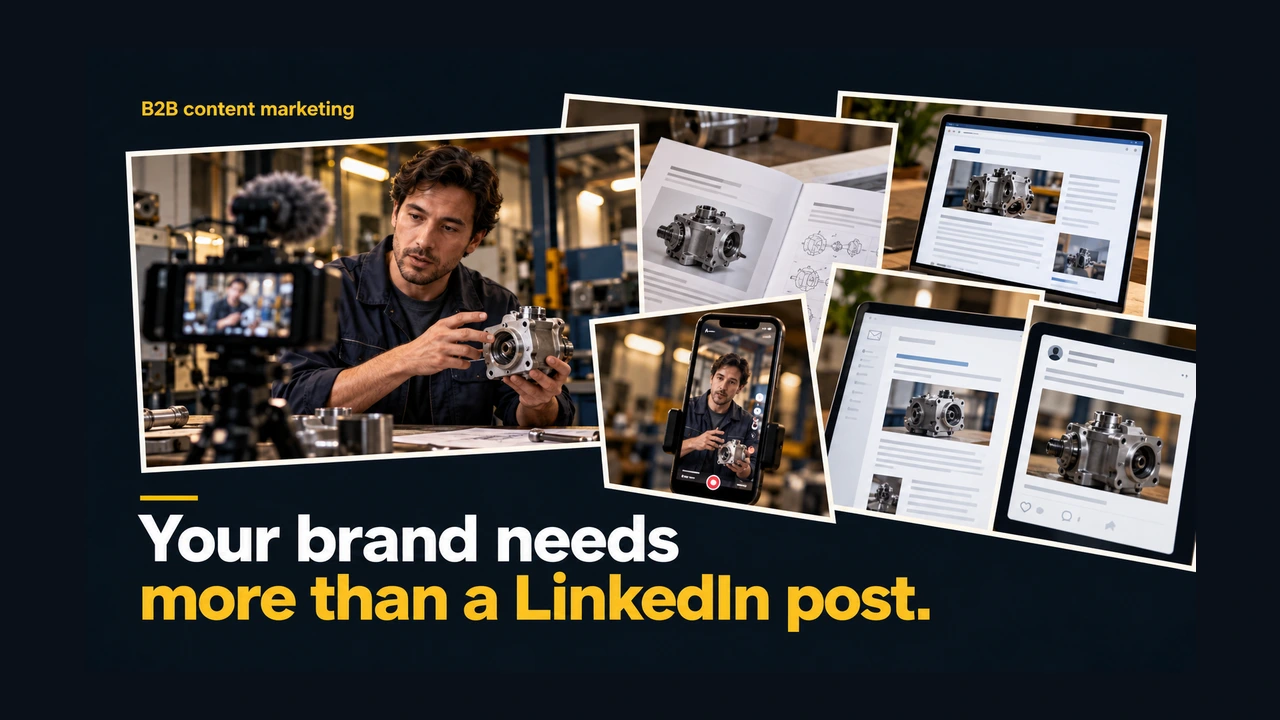
- A company needs a recognisable commercial story across the places its customers actually use. A LinkedIn calendar cannot carry the entire job.
- Consistency comes from developing the same argument in different formats. Copying one caption everywhere wastes the differences between those formats.
- Content spending should build familiarity with the business over time. Disconnected campaigns keep paying to introduce it again.
A brand can have an active LinkedIn page, a website, a YouTube channel and an email list, yet give a customer four different impressions of the business. Each channel has content. The company still struggles to explain what it wants to be known for.
I think that is one of the biggest failures in B2B content marketing. Companies organise the work around the posts they need to deliver. The customer is trying to understand the business behind them.
The commercial story has to survive that difference. What does this company understand? Why is its approach worth considering? What can it show me that makes the claim credible? Those questions follow the buyer from a feed to a search result, a film and a conversation with a colleague. A brand needs to keep developing its answer as the customer moves.
LinkedIn cannot be the whole content strategy
LinkedIn deserves serious investment. In the Content Marketing Institute's outlook for 2025, 85% of surveyed B2B marketers said it delivered the best social-media value for their organisation. That is a good reason to use the platform. It does not make every other encounter with the company irrelevant.
Gartner's February 2026 research abstract says 53% of IT and high-tech buyers rely on YouTube for product and vendor decisions. These are different audiences and measures, but together they make a practical point: activity on a professional network cannot stand in for the explanations a customer looks for elsewhere.
A company can make a persuasive claim in a short post. When the buyer wants to see the product working, a demonstration has another job to do. When they want to understand the operating change, an article or a detailed page can go further. Email gives the company a way to continue that discussion with someone who has chosen to hear more.
The business needs to show up in the places that matter to its customers, with a story that still makes sense when they get there. Adding another channel without carrying the argument into it just creates another page to maintain.
One argument should become several useful explanations
Consider an invoice-automation supplier whose argument is that exceptions keep finance teams buried in manual work. That gives it a subject worth developing beyond the product announcement.
A LinkedIn post can identify a familiar exception and explain why it delays payment. A film can show how someone handles it in the product. An article can examine where the exception came from and what changes in the finance team's work. An email can follow up on the integration question that stops a buyer moving ahead.
The same business is recognisable in each piece. Its claim acquires more substance as the customer spends more time with it. The company has given the audience several ways to understand why the product deserves attention.
If the post promises one thing, the video lists unrelated features and the website speaks in another set of claims, the customer has to do the connecting. That is a poor use of money already spent on production and distribution.
Consistency also needs an editorial position. A company that has nothing to say beyond the category's standard promises will struggle to become familiar for anything specific. Changing the format cannot make an interchangeable claim more distinctive.
Maersk carries a logistics story across its publishing
Maersk's Logistics Insights brings articles, a trend map, the Beyond the Box podcast and newsletters together around integrated supply chains. Resilience, digitalisation and sustainability are recurring subjects connected to the work its customers need to get done.
An early Beyond the Box episode, published in April 2023, discusses post-Covid supply-chain changes with a Maersk operations executive and an external shipping analyst. Its page introduces the subject, embeds the conversation through YouTube and connects the reader to further logistics material and email updates.
Someone can read an explanation, watch or listen to the discussion and continue receiving related work. The formats offer different depths of attention around a business subject that stays recognisable. The company is giving its expertise several opportunities to become useful to a customer.
That is the part smaller brands should take seriously. They do not need Maersk's publishing budget to make one worthwhile explanation work harder. They need to decide which subject they can credibly own, where customers encounter it and how the next piece adds to what the last one established.
A campaign needs to leave something behind
The temptation is to buy a launch film, a batch of posts and a new website page as separate deliverables. Each supplier completes a job. Unless someone carries the story between them, the business keeps buying pieces that do very little for one another.
CMI's 2025-outlook survey found that only 35% had a scalable model for content creation. Another 45% said they did not. Maintaining a public story becomes difficult when every new asset means rebuilding the brief, recovering the evidence and starting another approval cycle. The operating work matters because it determines whether the brand can keep participating in the conversation.
I would judge the content investment by what the company is becoming known for, as well as what individual pieces deliver. Can the audience recognise its position? Does the next explanation deepen the case? Can a customer find something useful after the launch campaign has finished?
The content can change shape without the company changing its story. A buyer moving from a LinkedIn post to a video or the website should understand the business better with each encounter.
The money is being spent on making the company easier to choose. A calendar full of unrelated posts is a very poor substitute.

Tokens are out, results are back in: AI subs hit ceiling
Ramp reported that America's biggest AI spenders cut their spend by 10%, and Sysco told investors it will reduce USD 100
Read article
Apple blocks another ads route for brands
Apple has blocked a specific identity-resolution route in WebKit 27. Another dollar in the chain is eaten up by consumer
Read article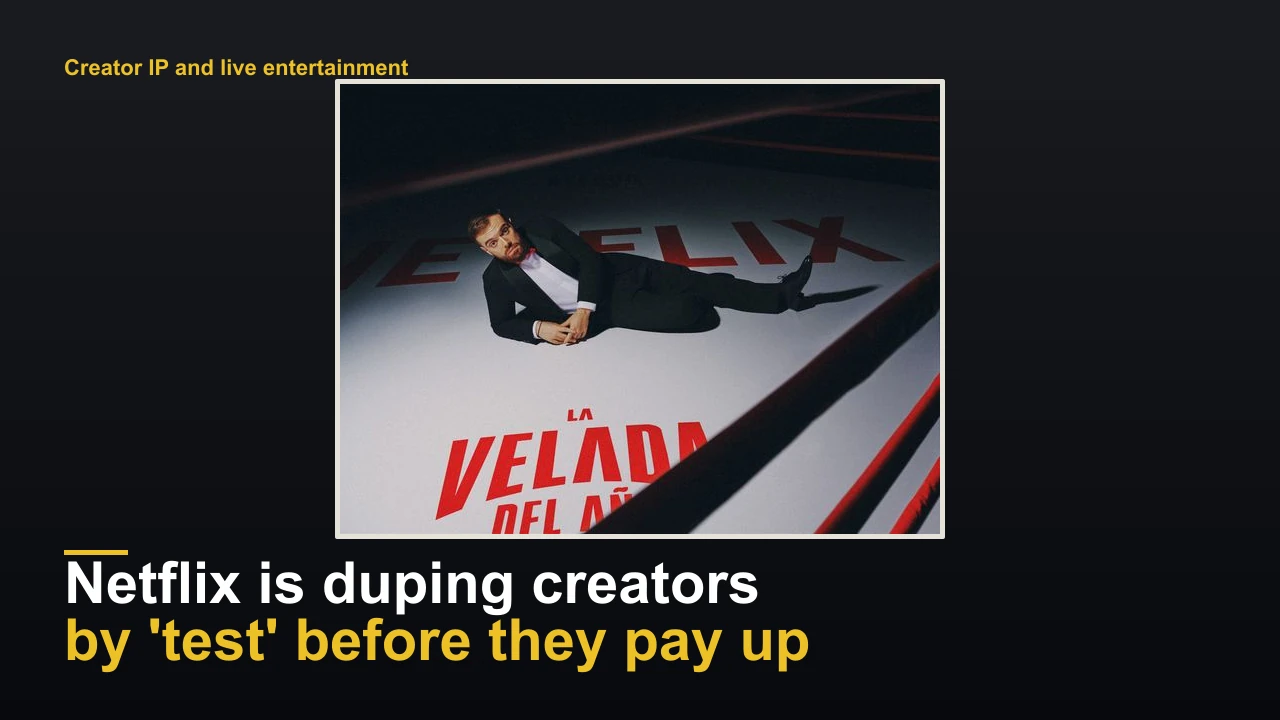
Netflix is duping creators by 'test' before they pay up
It is pitching creators the platform as a distribution channel, with a conditional payout attached. Creators are jumping
Read article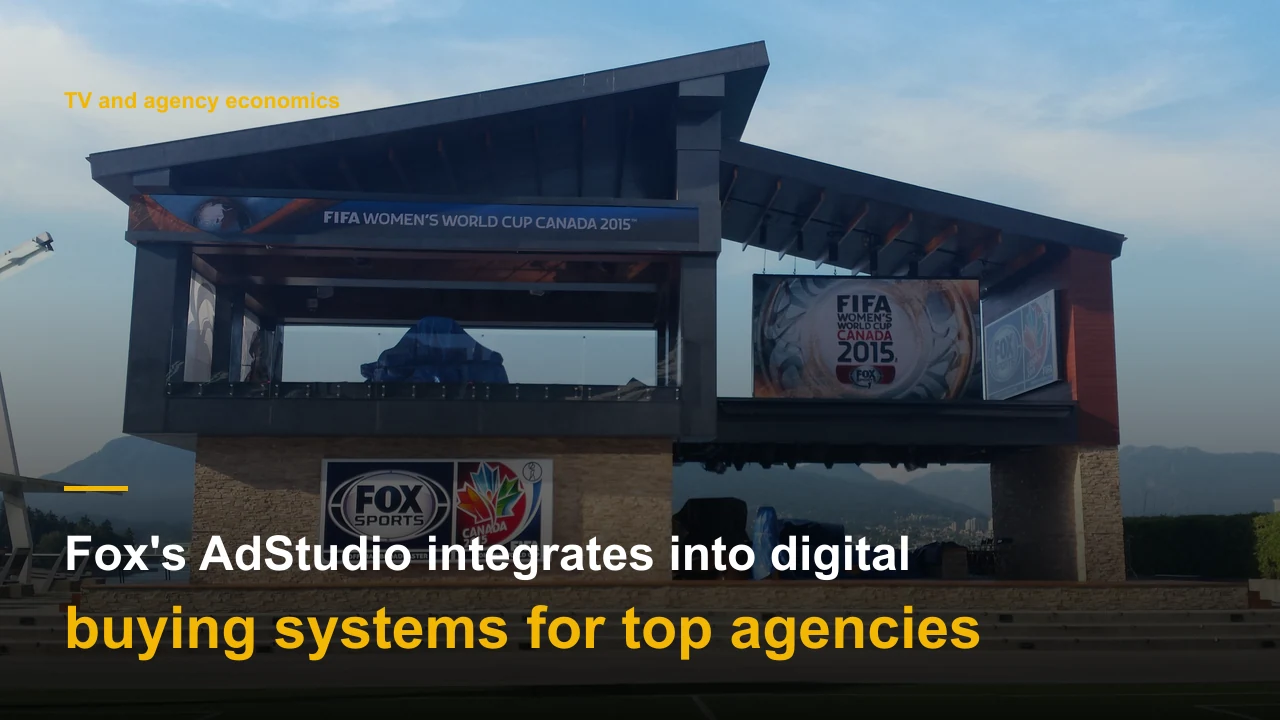
Fox's AdStudio integrates into digital buying systems for top agencies
Fox has put live television buying into the systems five major agency and media partners already use. The next commercia
Read article