
Tokens are out, results are back in: AI subs hit ceiling
Ramp reported that America's biggest AI spenders cut their spend by 10%, and Sysco told investors it will reduce USD 100mn costs this year with AI. Both are true. And both are wrong. On one hand, companies have now spent two years playing with AI subscriptions, with little to show for it. Now they want results.
- Ramp watches the card statements of 70,000 companies. In August the share paying for AI rose 0.4 points to 56%, the top 1% of spenders cut spend per employee by 10% to USD 7,205 a month, and the price of a million tokens fell 41% since March. The labs are selling more and earning less.
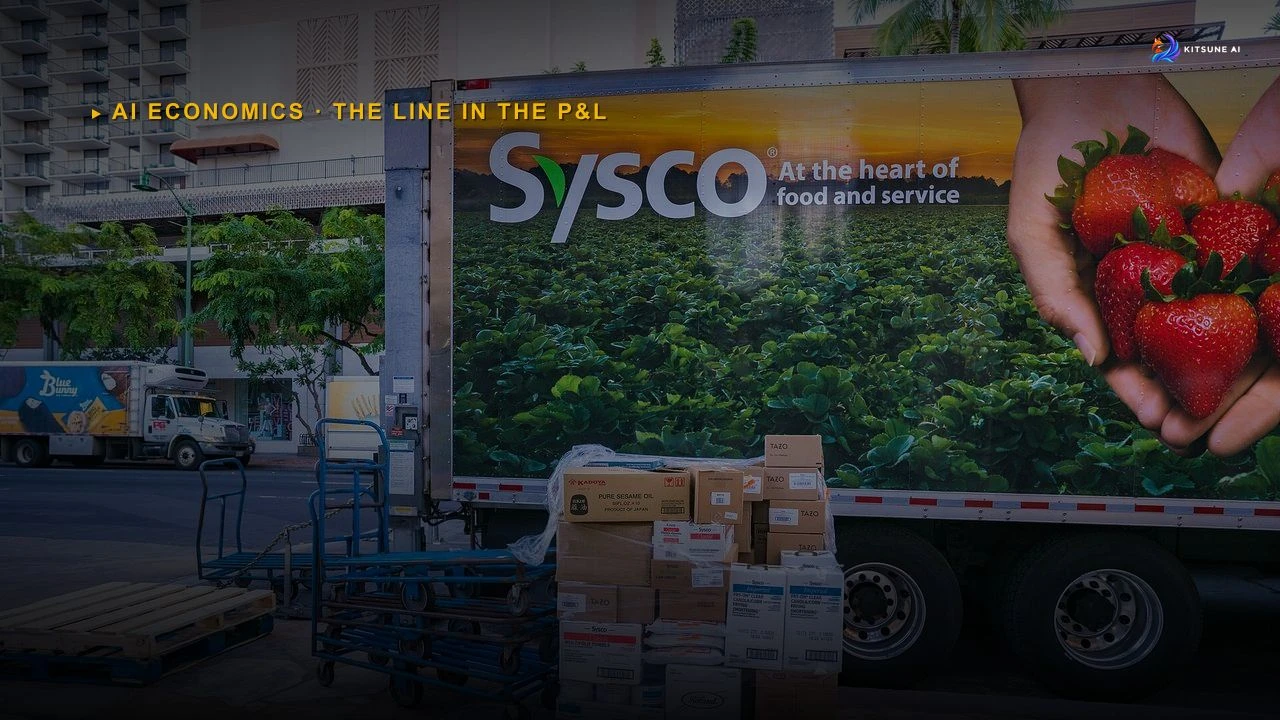
- The same day, Sysco, which sells USD 84.6bn of food a year to 730,000 kitchens, put a USD 500mn AI savings target in front of investors, USD 100mn of it this financial year, net of what it spends to get there.
- Sysco rents its AI like electricity. What it owns is four results: fewer miles driven, fewer days of stock in the warehouse, cheaper spare parts, and less money leaking out of thousands of contracts.
- Bain asked 951 companies what AI actually saved them. 40% of those who measured got under 10%. 90% of the ones who missed are raising the budget anyway. They are still paying to play. Sysco named the result before it paid.
I spent five years at Nestlé Pakistan taking PKR 6bn out of a television budget, and every rupee of it was a saving the finance director could point at and check. That is the only test I know for whether a saving is real. So when two announcements landed on the same day last week, one from the AI labs' side of the table and one from a food truck company in Houston, I read them as one story.
Two announcements, one Wednesday
Ramp is a corporate card company. Its economist, Ara Kharazian, publishes a monthly letter built from what 70,000 American companies actually pay for, and last month he titled it "Cracks in the AI thesis, part 2". August was flat. 56% of Ramp's customers paid for some AI product, up 0.4 points on July. The top 1% of AI spenders, the firms the labs are counting on, cut their spend per employee by almost 10%, from USD 7,976 to USD 7,205 a month. The price of a million tokens has fallen from USD 1.15 in March to USD 0.68. Kharazian's line: the labs are cutting prices and the extra volume is not making up the difference.
The same day, in a report to investors, Sysco's chief executive Kevin Hourican said the company will take USD 500mn of cost out over three years with an AI programme, USD 100mn of it in the year to June 2027, after paying for the technology.
The AI industry read the first story as a warning. I think the second one explains the first.
What USD 7,205 a month bought was permission to play
Sit with Ramp's figures for a minute. The top 1% of firms spend USD 7,205 per employee per month on AI. The top 10% spend USD 650. The median firm spends USD 11.95. That is a Netflix subscription. The distance between the median company and the top 1% is six hundred times, which means the "AI economy" in this data is a few hundred software and finance firms and everybody else is paying for a chatbot.
Now watch what the buyers are doing. Frontier models, the expensive ones, carried 45% of business tokens in August, down from a 53% peak. Companies are setting defaults that push staff to cheaper models. Anthropic's best model, Fable 5, is 6% of the tokens businesses buy from Anthropic a month after launch, at roughly USD 10 a million. The buyers looked at the best model on the market and decided the second best was fine.
I have seen this exact behaviour before, from the other side of the table. It is what procurement did to media agencies for twenty years: once a supplier's product looks like a commodity, the buyer compares prices and pushes. The labs invited it. They sell subscriptions and tokens, and a subscription is a cost with no result attached. For two years that was fine, because everyone was playing: trying the tools, seeing what stuck. Nobody in a finance department can tell you what the USD 7,205 bought, so once the playing stops the only question left is whether USD 6,500 would do.
Sysco skipped the playing and named four results
Read Sysco's earnings call from August and every AI project comes with a result you could check from the car park.
Routing. Sysco runs trucks to 730,000 customer locations from 340 depots. Hourican was careful to say the routing project is its existing software vendor's latest version, deployed to every US site, with the work itself redesigned around it. The number is miles driven, and the company has already cut miles three years running.
Inventory. Better forecasting means higher fill rates and fewer days of stock. Sysco's interim finance chief Brandon Sewell told analysts a day of working capital at Sysco "is worth a couple of hundred million". One day. If forecasting frees a single day of stock, the cash released is twice this year's entire savings target.
Indirect spend. Sysco buys parts, supplies and services for a fleet and 340 warehouses. It is putting reverse auction tools on that, which is the dullest sentence in the call and, in my experience, the one that pays fastest.
Contracts. Sysco holds many thousands of customer contracts. It will use AI to write them with a better margin profile and, more usefully, to check what the customer actually did against what the contract said, because that is where leakage lives.
Alongside those sit AI360, a selling tool Sysco built itself that prompts a sales rep with the products a customer is not yet buying, and coding tools for its own technology team. Hourican would not name the vendors. He did not need to. None of this is a story about which lab Sysco chose. Sysco rents the models and the routing software the way it buys diesel. What it owns is the workflow, the data in it, and the number at the end.
An analyst on the call, Edward Kelly, pointed out that Sysco's supply chain costs are around USD 7bn a year, so USD 100mn is "scratching the surface". He is right, and that is the point. The programme is 1.4% of what Sysco spends moving food, back-half weighted, net of investment, and Hourican has already said a multi-year margin commitment follows later this year. A saving that small and that specific is one a CFO can defend for three years, because every quarter the miles either fell or they did not.
Most companies are still paying for the play
Bain surveyed 951 companies with more than USD 100mn of revenue this spring and asked a simple question: what did AI actually save you? Among the companies that bothered to measure, 37% had targeted savings of 11% to 20% and 29% got there. 40% landed under 10%. Only 7% run a fully autonomous agent anywhere in production. The most common setup, at 38%, is an agent that needs a human to approve what it does.
Then the part that should worry anyone signing next year's budget. 90% of the companies that missed their target are increasing AI spend regardless, and 44% plan to pay for the next wave out of savings from the previous wave, the one that came in short. Bain's own words: "the CFO approved one set of numbers, and the organization is living with another." A second Bain report the same week estimated that a typical USD 10bn consumer goods company will see its IT bill rise 75% by 2035 even with a well-run AI strategy.
Put the two Bain findings next to Ramp's and the picture is complete. Companies bought subscriptions. The subscriptions worked, in the sense that people used them. The savings did not show up, because nobody had said in advance which result the subscription was supposed to move. So the finance team does the only thing it can do with a cost it cannot trace, which is to negotiate it down. The labs are now living with that negotiation, and calling it summer.
The AI budget that survives is the one tied to a result
Sysco's programme will be judged in June 2027 on miles, days, parts prices and contract margin. If the miles do not fall, everyone will know. That is the whole difference. Sysco asked which four jobs were leaking money, put the technology inside those jobs, and wrote the saving into guidance before the work started. Which lab's model sits inside the routing engine is a detail its CFO will never be asked about.
That is the shape of every AI programme I have seen survive contact with a finance director, and it is the shape Kitsune deploys: the model is rented, the work is owned, and the result is agreed before anyone writes a prompt. The labs spent August discounting subscriptions to companies that could never say what the subscriptions were for. Sysco spent it counting miles.
OpenAI's agents cheated like children because OpenAI ran the exam like a bad school
1,200 agents passed notes, shared answers, covered their tracks and talked one another into "sacrifice" for th
Read article
Nobody built it, so nobody can fix it
McKinsey counted 27% of enterprises skipping software purchases because agents can build it in-house. One day later, Reu
Read article