
TikTok’s ad machine is taking credit for organic sales too
GMV Max can attribute an order to a campaign even when the customer never interacted with its ads. The shop may be doing well. That still leaves a very expensive question about what the advertising contributed.

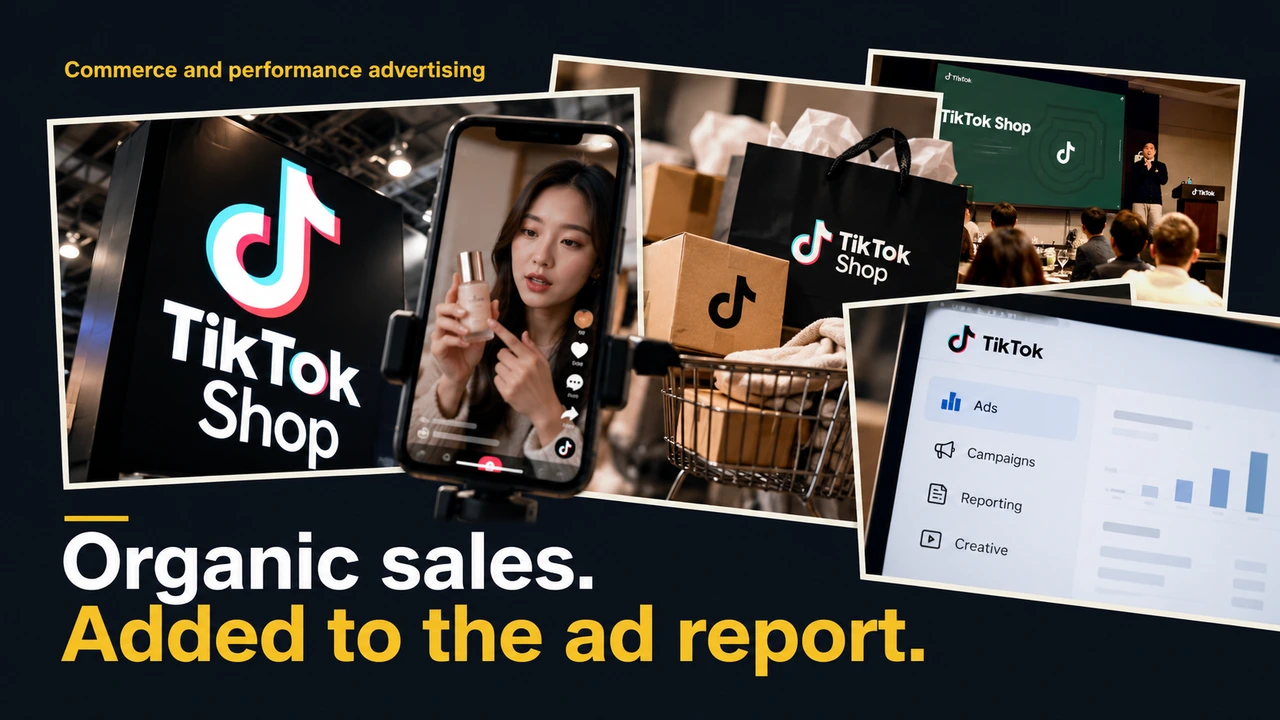
- TikTok credits paid and organic orders for promoted products to an active GMV Max campaign, including orders without an ad interaction.
- Google, Meta and Amazon have made attribution central to advertising decisions.
- Brands need to know when a platform is explaining new demand and when it is assigning itself credit for demand already present.
- In a world with more and more ad blockers, and less consumer preference for ads, Tiktok's new move is dubious in its intent.
TikTok Shop has been a major hit, and like much of the rest of ecommerce, it is running out of steam. This is why their new GMV product silently folded in organic orders as well. The stronger the shop, the more existing demand can help make the ad machine look productive. It is remarkably convenient for the company selling the ads. And its not the first time that digital ads suppliers like Google, Meta and Amazon have done this. Adding affiliate commissions and other costs to optimization improves the accounting, but it does not answer whether the advertising created the sale. Brands that hand over their entire shop to automated buying risk paying more to harvest demand their products and creators already earned. The argument is about who gets credit, and therefore who gets the next advertising dollar. In Pakistan, Meta's ad products claimed ROAS that was flimsy at best, and always blamed on the local players like Daraz and Foodpanda not giving them the right accesses.
A customer can buy without seeing an ad and still enter the campaign return
TikTok’s attribution documentation says that whenever a customer orders a selected product while its GMV Max campaign is running, the order is attributed to that campaign whether or not the customer engaged with an ad.
Its reporting guide includes paid and organic orders in gross revenue and ROI. The reported return divides that revenue by advertising cost. Think about an established shop. It may have followers, customers returning for another order and creator videos that already bring people to the product. Once the selected product is in an active campaign, those routes can contribute orders to the same campaign result. A dashboard can therefore look strong partly because the business had reasons for people to buy before the advertiser added the next dollar.
That is different from buying genuinely additional demand. Merchants on the Tiktok Shops ecosystem will never know organic from paid, and continue to misattribute to ads. It is a vicious cycle which only benefits the platform at the cost of the advertiser.
Better cost accounting can still reward the easiest sale
The new cost inputs are useful. A merchant pays more than an advertising bill to complete a sale, and an affiliate commission is a real expense.
TikTok’s affiliate-cost optimisation documentation describes a return based on GMV divided by advertising cost plus estimated affiliate cost. The estimate uses the selected products’ average commission rate over the preceding 14 days. Availability is limited to specified accounts and markets.
That changes what the system can favour. If two pieces of content are expected to produce similar results, the commission can affect which looks more efficient. TikTok says content with a higher commission can still receive delivery when its expected return justifies the expense. The setting is making a commercial choice across different ways of producing a sale.
It does not settle how much of the resulting demand would otherwise have existed. It also does not turn gross merchandise value into the merchant’s profit. Product cost, fulfilment, returns and the rest of the shop’s expenses still have to be paid.
This is where the seller and the platform can read the same campaign differently. The platform sees transactions it can optimise. The merchant needs to know how much additional contribution remains after the full cost of getting and serving the order.
Digital advertising has been confusing credit with contribution for years
The issue predates TikTok Shop. The well-known eBay paid-search experiments, published as a working paper in 2014, found no measurable short-term benefit from brand-keyword advertising in that setting. New and infrequent buyers responded differently from frequent users, who accounted for much of the expense.
That result came from a large destination brand with existing demand. It does not establish that every brand-search campaign is waste. It does show how easy it is to buy access to a person already heading towards the business and then credit the ad for the journey.
The distinction matters on today’s platforms too. Amazon’s attribution rules can credit qualifying purchases following an ad interaction, including purchases beyond the exact advertised product in applicable cases. Google provides Performance Max experiments to investigate additional value. Meta has separately promoted incremental attribution in its 2025 results commentary.
These are different systems. The shared commercial problem is deciding what the seller’s reported return actually establishes for the buyer. GMV Max’s selected-product rule goes further than requiring a qualifying click or view for every attributed order.
Brands often delegate that interpretation to the same agency or platform team responsible for delivering an attractive campaign report. That arrangement gives a very large role to the definition of success. A cheap attributed purchase can be an expensive repeat customer the business would have retained anyway.
Better access to purchase data cannot answer every question
The Pakistan experience in my opening sits inside a familiar operating problem. An advertiser, a platform and a marketplace may each hold a different part of the customer journey. Getting the sales event back to the buying system is useful. It can improve reporting and give an optimiser information it previously lacked.
But completing that data connection does not produce a comparison with what would have happened without the advertising. It can make the platform more confident about which order to count while leaving the advertiser’s original commercial question open.
That is why the access argument can become so frustrating. A brand spends money, sees a persuasive return in one system and then discovers that understanding the business result requires another integration or another definition. Better event sharing is part of operating the channel. It cannot carry every claim made about the channel’s contribution.
The brand’s own order history has another purpose here. It can show whether the apparent growth comes with new customers, repeat orders, healthy margins and a business that can sustain the cost of acquiring the next buyer. Those are commercially meaningful results even when an advertising dashboard offers a simpler number.
A growing shop can still pay too much for its growth
Rapid transaction growth can coexist with this problem. Momentum Works and Tabcut estimate that TikTok Shop’s global GMV grew 92% in the first half of 2026. GMV measures the value moving through the shop, rather than the profit retained by each merchant or the demand caused by each advertising dollar.
TikTok also offers a Conversion Lift Study using test and control groups for eligible advertisers. That is a more direct way to investigate additional conversions. Its account and spending requirements mean it is a separate exercise from reading the standard campaign return.
A before-and-after comparison can be useful operating context. Seasonality, organic momentum, a promotion and changing spend can all move the result across the same period. Calling that movement lift does not make the campaign responsible for every change.
I want an advertising product to make a merchant’s business better. It can earn its fee by finding buyers, improving distribution and producing additional profitable orders. Whole-shop optimisation can help with that. The merchant still needs to understand the difference between the business getting bigger and the advertising deserving more money.
TikTok’s attribution rules make its campaign responsible for a broad set of sales. The advertiser should expect a much stronger explanation before giving it responsibility for the next budget too.
Netflix is duping creators by 'test' before they pay up
It is pitching creators the platform as a distribution channel, with a conditional payout attached. Creators are jumping
Read article
Apple blocks another ads route for brands
Apple has blocked a specific identity-resolution route in WebKit 27. Another dollar in the chain is eaten up by consumer
Read article
Fox's AdStudio integrates into digital buying systems for top agencies
Fox has put live television buying into the systems five major agency and media partners already use. The next commercia
Read article
Publicis's LiveRamp deal makes agency neutrality harder to sell
Publicis already owns an agency network and Epsilon. A LiveRamp deal would put a key data connector used by other agenci
Read article