
The end of the big pharma era?
One founder and eleven outside labs got a rare-disease programme far enough for somebody else to want to own it. The interesting question is who gets to choose the next disease.
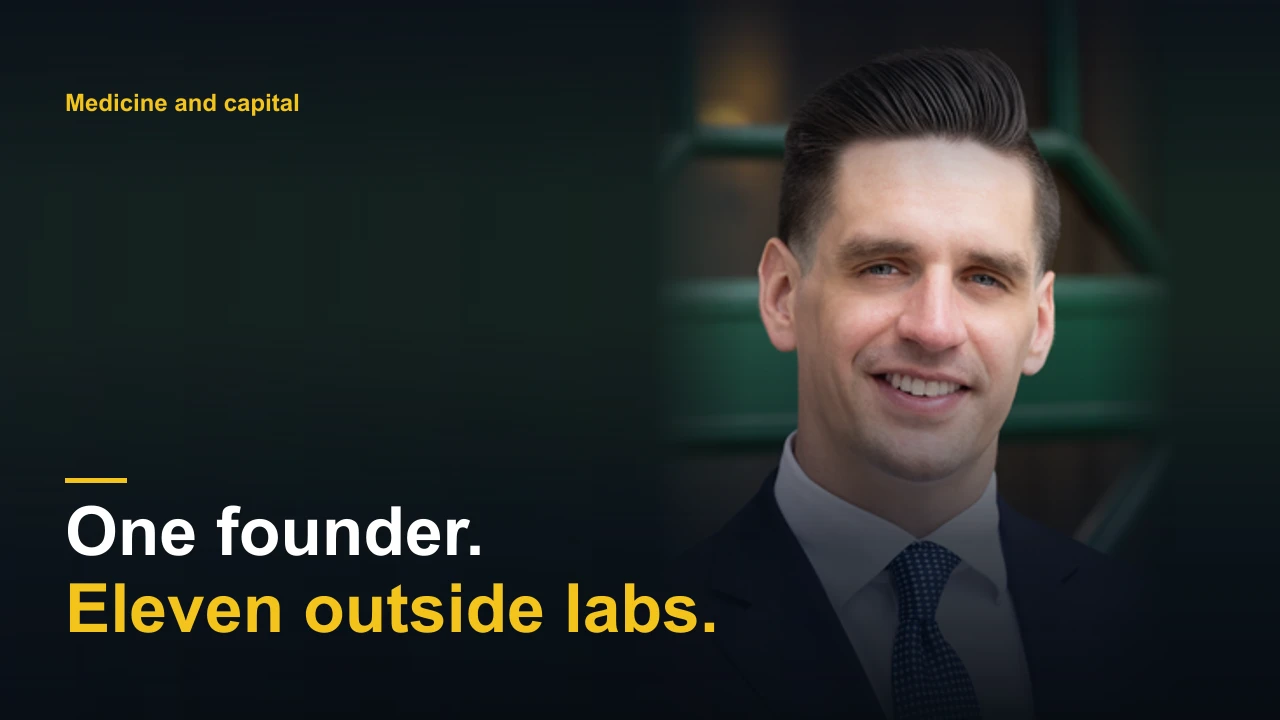
- Mithril Medicine used AI to organise work across eleven outside labs. Its early muscular dystrophy result was in mice.
- A patient foundation put $40 million into a drug discovery collaboration a quarter of a century ago. Pharma has shared control of the research agenda before.
- A separate AI-discovered drug has reached a randomised human trial. Getting a medicine from that point to a patient still takes evidence, money and an organisation accountable for both.
Eleven laboratories worked on a drug programme for a company with one full-time employee. If you heard only the headcount, you might think the accomplishment was replacing eleven labs with a laptop. Reading Mithril Medicine’s story, I came away thinking the labs were the point. Cody Tranbarger found a way to put all eleven to work on a disease he chose. Nobody had to give him a department first.
That is a fairly direct challenge to one of big pharma’s privileges. A company that controls a research budget gets to decide which diseases warrant a first experiment. A perfectly sensible decision about the size of a market can mean that a family spends another decade waiting for somebody to find out whether an idea works. Even a modest change to the cost of asking that first question could change whose disease gets picked.
Count the labs as well as the employee
Mithril was working on two rare forms of muscular dystrophy. Tranbarger used Claude to help organise contracts, logistics and experiments. According to Anthropic, one programme went from idea to promising results in mice in less than 18 months. Anthropic acquired the company. The next home for this research turned out to be a model developer with the money to carry it further.
The business decision I’d like to see inside that 18-month period is the one where the founder commissioned the next piece of work. With outside labs, a founder can spend money on a particular question and decide whether the answer justifies another cheque. A small permanent team can keep going without hiring every speciality onto payroll. The difficulty is that results arrive from different people, on different terms and schedules. Someone has to know what came back, whether it answers the question asked, who owns it and which supplier is waiting on it. Leave that job unattended and eleven specialists can produce eleven invoices long before they produce one useful conclusion.
That’s unglamorous work for an AI and a good reason to take it seriously. It changes how much work a founder can supervise. The people on the other end of the contract still have to perform the experiments. Anthropic hasn’t published the full bill for those labs or a like-for-like programme run without AI. We know what one founder organised. We have much less evidence for what another founder would need in the bank to repeat it. Anyone selling an investment thesis on the cost saving should ask for those invoices.
Patients bought a say in drug discovery before AI
In 2000 the Cystic Fibrosis Foundation committed $40 million to a collaboration with Aurora Biosciences. The foundation wanted treatments for the underlying disease. Aurora had the screening technology. People who cared about one disease could put enough capital behind it to change what a commercial laboratory spent its time looking for.
In 2014 the foundation sold royalty rights on treatments developed by Vertex for $3.3 billion. That was the price of rights to future payments after years of development. Treating the two numbers as a simple investment multiple would lose practically everything worth understanding about those fourteen years. Patients, a foundation, scientists and an industrial partner each had something the others needed. The foundation secured a stake in the success it helped finance, then used that stake to fund more work on cystic fibrosis.
Mithril raises a different entry question. Could a smaller group, without $40 million or a large institutional sponsor, get useful evidence before it asks a commercial partner to pay attention? There’s a considerable difference between walking into that meeting with a disease nobody has prioritised and walking in with the results of an experiment the potential partner would otherwise have had to commission itself. Even if the same pharma company eventually manufactures the drug, the price and ownership of the early work are now up for negotiation. An acquisition is one way that negotiation ends.
A human trial changes the conversation
A family can start a programme too. In 2019, Nancy Fliesler documented how a mother’s request for help reached a team at Boston Children’s Hospital. The team developed an investigational medicine for one child, Mila Makovec. In their published account, the clinicians reported fewer seizures during treatment. The drug was specific to Mila. There was no second customer to spread the cost across. That is the harder version of the market question. If AI cuts the expense of coordinating ten more such programmes, who will pay for each individual medicine to be made, reviewed and given to the person it was designed for?
Rentosertib gives us a look further along the road. A separate group used AI in discovering a drug target and designing a candidate for idiopathic pulmonary fibrosis, a disease that scars the lungs. Its researchers published a randomised phase 2a trial involving 71 patients assigned across four groups for 12 weeks. The study’s primary measure was the proportion of patients experiencing adverse events after treatment began. Those proportions were similar across the groups. The researchers also reported a lung-function signal in the highest-dose group that warrants further study.
It’s a different disease and an entirely different programme from Mithril’s. It belongs in this discussion because it asks more of AI than managing a research calendar. An AI-assisted scientific decision made it far enough that patients and clinicians could test its consequences. A small, short trial can give the sponsor a reason to invest in a larger one. Sustained benefit for patients will need its own evidence.
For a rare disease, even the question of what to measure can absorb years of work. The FDA describes patient populations scattered across countries, sometimes with little reliable information on how the disease progresses without treatment. Suppose a child’s condition stays stable during a study. How do you know whether the treatment helped or the disease usually stays stable for that long? A patient registry accumulated over years can be worth more to that decision than a much faster model. Somebody still has to fund the clinics, earn the families’ trust and stay long enough to collect the follow-up. The FDA’s rare-disease programme funds natural-history studies as well as clinical trials for good reason.
If I were backing the next Mithril, I’d want to know what the founder owns the morning after a good result. Are the data theirs to take to another partner? Is there a patient community ready to help define a meaningful benefit? Is there enough cash to turn down the first offer? AI may let more founders choose which medicines get a start. The founder who can afford the next study also gets a say in whose hands the medicine ends up.
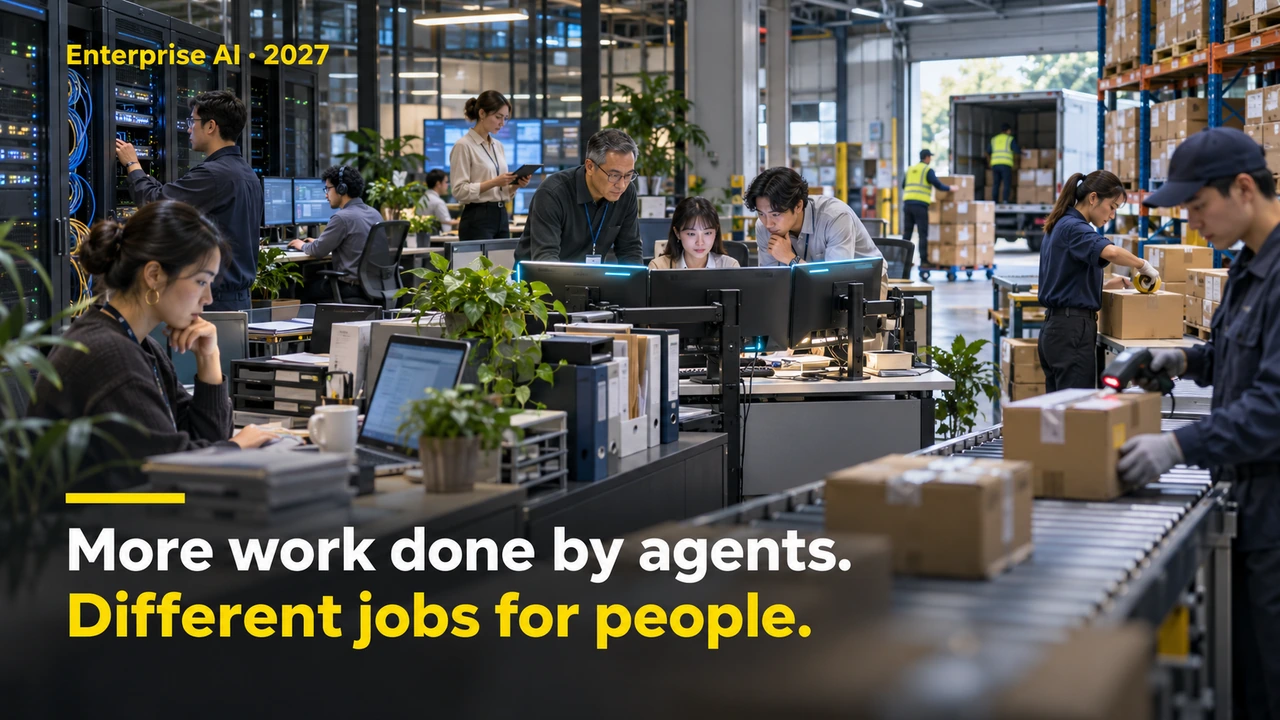
In 2027, enterprises will pay AI agents for work they can prove is done
The enterprise agent race is shifting from demos to delegated work. Vendors and employees who can make a bounded process
Read article
eRetail seasons dry up as brands back out of discounting
Under Armour and Nike are rebuilding around fewer promotions and more full-price selling. The customer habit those sales
Read article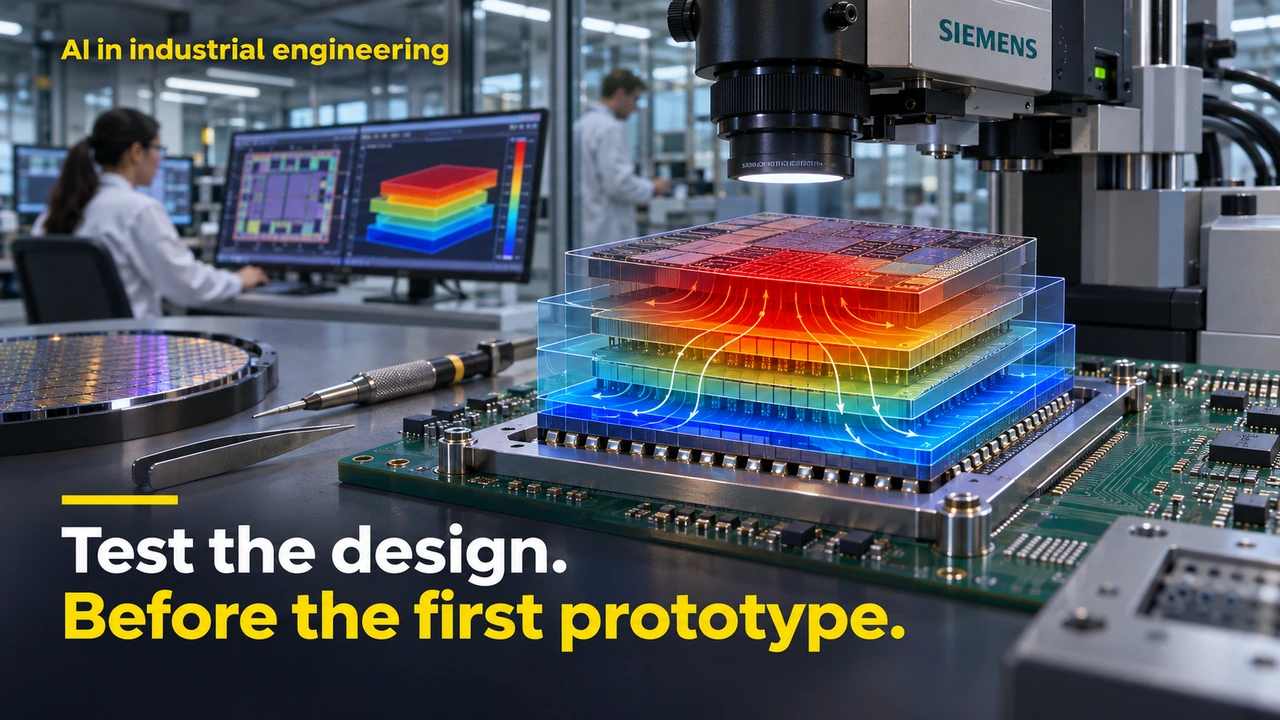
Siemens’ chip-design agents make the case for AI spending before prototyping
3D chip stacks make heat, power and electrical decisions costly once the package is built. Siemens says an AI agent can
Read article
Publication guarantees are making PR agencies easier to replace
When a provider can promise a named article, a date and a refund, the placement becomes easier to buy and easier to comp
Read article