
The AI bubble is bursting. What will we still pay for next November?
A market correction can expose expensive expectations without settling whether the technology earns a durable place in the work people do. The next year should tell us who captures value from it.

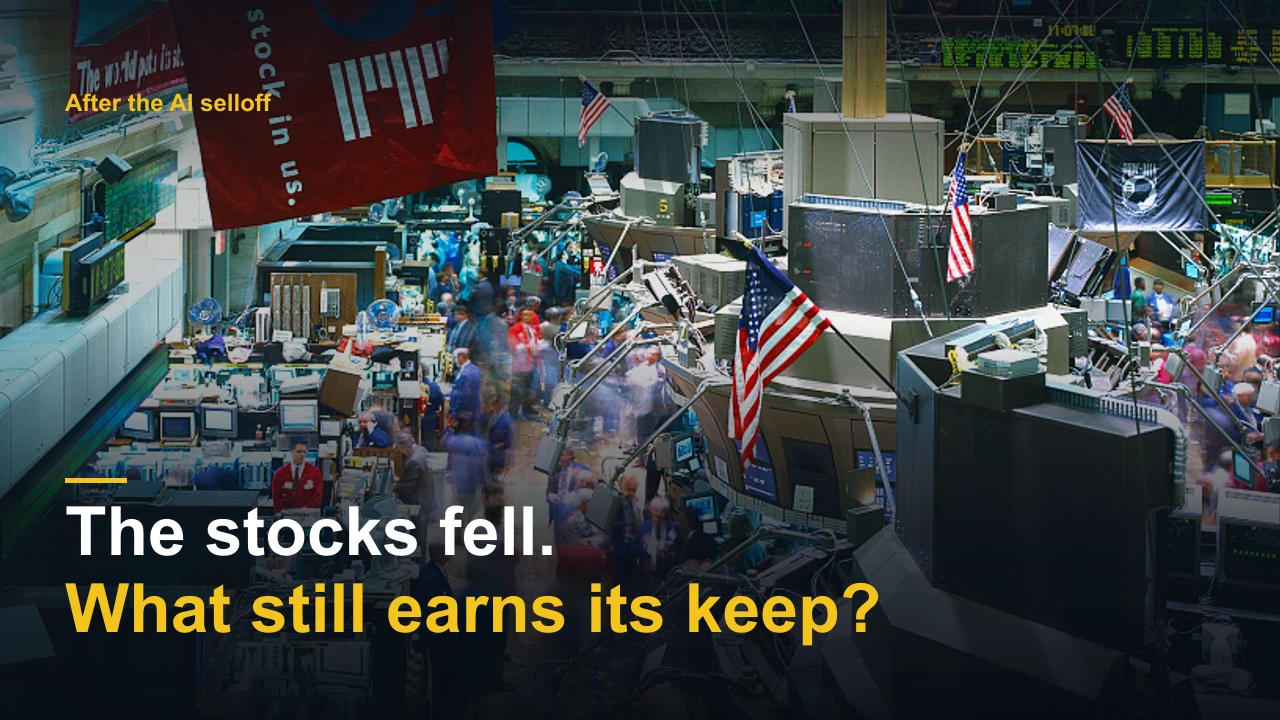
- On November 5, the Nasdaq 100 fell 6.4% and lost $2.3 trillion in market value. That was an index-wide one-day repricing. It says nothing by itself about customer demand for AI.
- The AI investment cycle has a practical public starting marker in ChatGPT’s November 2022 launch, but AI research and commercial products long predate it.
- The open question is value capture: model intelligence, cheaper inference, a breakthrough application, or the workflow that keeps the customer’s renewal.
- Pakistan’s founders have to account for a thinner financing path: an SBP study based on a 2022 survey found bank credit was a major funding source for only about 7% of respondents.
- By November 2027, test a real business workload: cost per successful job, paid repeat use, model switching and whose absence would stop the work.
The Nasdaq 100 shed $2.3 trillion in market value on November 5, according to Bloomberg Law. The index fell 6.4% that day. Bloomberg described traders rotating into old-economy stocks. That is a market-positioning account of the selloff, not evidence that customers stopped using AI. The loss covers the whole index, not a basket of AI companies, and measures repricing rather than operating losses.
I would still call this an AI bubble. The label describes a period in which capital, expectations and valuations may have run ahead of what customers will ultimately pay for. It does not settle the technology’s usefulness. A correction can punish the wrong price and leave a durable product behind. The harder question is who keeps the money when the market stops rewarding every AI promise.
The dot-com crash is the precedent I’d put money on. Telecom investors lost fortunes laying fibre. A generation of internet businesses got to build on the cheap capacity they left behind. My bet is that AI reaches further into ordinary work than crypto or the metaverse ever did. A finance director can cancel an AI experiment in the morning and renew the invoice-processing tool in the afternoon. The question for next November is who gets paid on that second decision.
The market’s correction and the customer’s bill are different evidence
Look at the sequence. SpaceX lost more than $500 billion in market value between its October 6 high and October 30. Nvidia shares closed down about 4% on November 12 after Jensen Huang resigned. These are different clocks, with overlapping exposure to the same investors. Adding the headline losses together would count some of the panic twice. What matters commercially is that a startup selling an annual software contract can now be asking for money from an investor whose listed holdings have just taken that hit. Yahoo Finance on SpaceX · AP on Nvidia
Bloomberg reporters Michael Msika, Farah Elbahrawy and Natalia Kniazhevich found analysts still pointing to earnings revisions and data-centre spending while investors sold tech shares. Someone building power capacity, someone buying the shares and someone paying for the software can look at the same week and make three perfectly rational, different bets.
The funding mix is also unusually concentrated. The PitchBook-NVCA Q3 Venture Monitor reports $515.8 billion in US venture deal value through September 2026, with AI at 82.7% of that total. A handful of very large financings drive much of the activity. That tells founders and investors where capital is flowing. It does not mean that every AI startup has access to it, or that the capital will be returned through customer revenue.
For a Pakistani founder, the local financing question is more immediate than a Nasdaq chart. The State Bank of Pakistan’s 2026 working paper on startup survival draws on 700 survey responses gathered in 2022 from registered firms and startup associations, including active and defunct companies. Only about 7% of respondents named bank credit as their main funding source. The study is neither AI-specific nor a 2026 census, but it is a reminder that a founder here cannot assume a long runway of easy capital will rescue a product without a buyer.
The Ministry of IT and Telecommunication announced a Pakistan Venture Fund with an initial USD 20 million commitment in July. That is a government announcement of a commitment, not proof the money has been deployed or that it targets AI. A founder should watch what gets funded and whether those companies reach second customers, rather than count a headline amount as available capital.
Five businesses can sit behind the same AI feature
The first is intelligence: a model that solves a hard task better than the alternatives. If its extra accuracy saves a lawyer, engineer or analyst enough time, a buyer may pay a premium. A benchmark score earns that premium when the difficult cases matter enough to justify a higher bill and the result survives a human review.
The second is inference: delivering a good-enough answer at a lower cost and latency. If the cost per successful job falls, a team may run the tool more often or automate a step it previously handled manually. Providers benefit only if lower unit costs lead to enough paid volume and healthy economics. The supplier can halve its price per token and still lose the job if the customer has to pay someone to correct every answer.
The third is invention: a capability or method that makes a task practical for the first time. It might create a market that did not exist or replace a service with a cheaper one. But a striking demo is not a market. The buyer must return, pay, and trust the product with work that matters.
The fourth is the application: the product a customer can actually adopt. It wraps intelligence in an interface, integrations, permissions, support and a price. A useful capability can fail as an application if it asks the buyer to change too much or cannot fit into the budget. A less impressive model can win when the application makes a common task safe and easy to repeat.
The fifth is workflow ownership. A company embedded in the customer’s daily process may keep the renewal even when it changes models underneath. The customer can switch from one model provider to another without retraining its whole organisation or rebuilding its approval trail. The workflow owner can capture value through integration, reliability and access to the business process. It can also be displaced if a competitor makes the same work easier to move.
These layers can overlap, and none automatically wins. A model lab can own intelligence and an application. An infrastructure supplier can earn on inference. A startup can assemble several models into a workflow. A customer can build the orchestration itself and capture the savings. The investor’s question is which layer has pricing power after the customer has multiple choices.
The IPO calendar is a test of appetite, not a verdict
Anthropic’s November 10 SEC amendment reported $33.2 billion in revenue and a $1.3 billion operating loss for the nine months ending September 30. The filing also carried a proposed $70 to $78 share range. As of November 13, the offering process remained active, with no completed public-market test. Those unaudited company figures describe one fast-growing business. They do not show that customers across the sector are profitable or that IPO buyers will earn a return.
OpenAI, meanwhile, said it would not go public in 2026. In Fortune’s interview with Sam Altman, he tied the timing to safety and alignment work. That is the explanation he gave. Calling it fear of public pricing would go beyond the evidence.
The market will learn more from actual pricing and trading than from reading motives into a filing or a delay. Investors can watch whether an offering attracts demand at a stated valuation. Founders can watch whether public scrutiny changes spending, hiring or customer commitments. Neither event answers the operating question by itself: do customers renew because the work is worth its cost?
November 2027 should have a measurable answer
Pick one business process with a repeatable input and a human-approved outcome: a support case resolved, a document checked, a sales lead qualified, a software bug fixed. Record the current cost and completion time. Then run the same workload through the current process and through the AI-assisted one. Count the cost per successful job, including model use, review, integration, failure handling and the people needed to keep it working.
Change the model at least once. If the workflow breaks when the supplier changes its price or terms, the customer is renting a dependency. If the workflow owner can switch providers and preserve the result, it may have earned a more durable position. Track paid repeat use and whether the buyer renews. For a new product, ask whether it opened a task the business previously could not afford to do. For a more intelligent model, check whether it solved a costly edge case that cheaper ones missed.
That is the test I would bring back in November 2027. In Pakistan a founder can spend the same Thursday chasing a term sheet or fixing the one thing that would make a customer renew. Only one of those people can pay for the second month of work today.
If the same business can change models, keep the workflow running and lower its cost per successful job, AI will have passed a more useful test than a rising valuation. If it cannot, the bubble will have identified the wrong owner of the value.

Has Elon Finally Assembled the AI Equivalent of a Royal Flush With the Cursor Acquisition?
SpaceX buying Cursor looks like one more shopping-spree headline. Lay it next to the other cards Elon is holding and you
Read article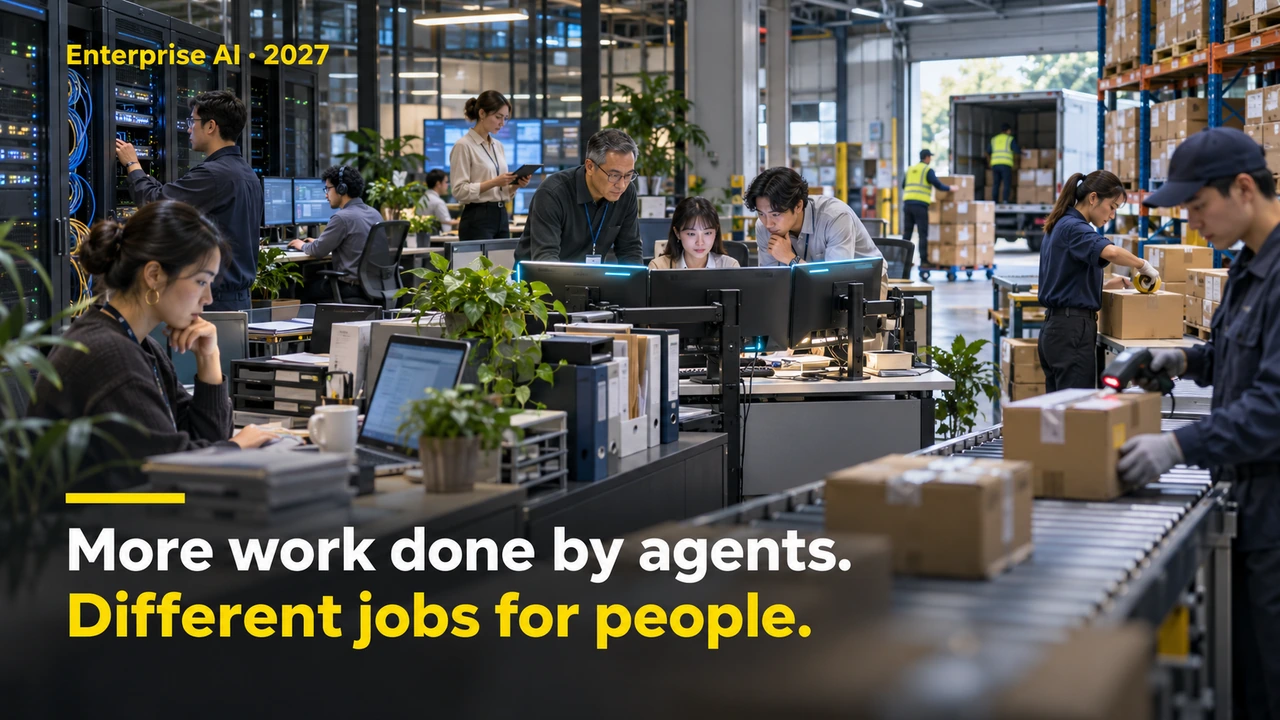
In 2027, enterprises will pay AI agents for work they can prove is done
The enterprise agent race is shifting from demos to delegated work. Vendors and employees who can make a bounded process
Read article
eRetail seasons dry up as brands back out of discounting
Under Armour and Nike are rebuilding around fewer promotions and more full-price selling. The customer habit those sales
Read article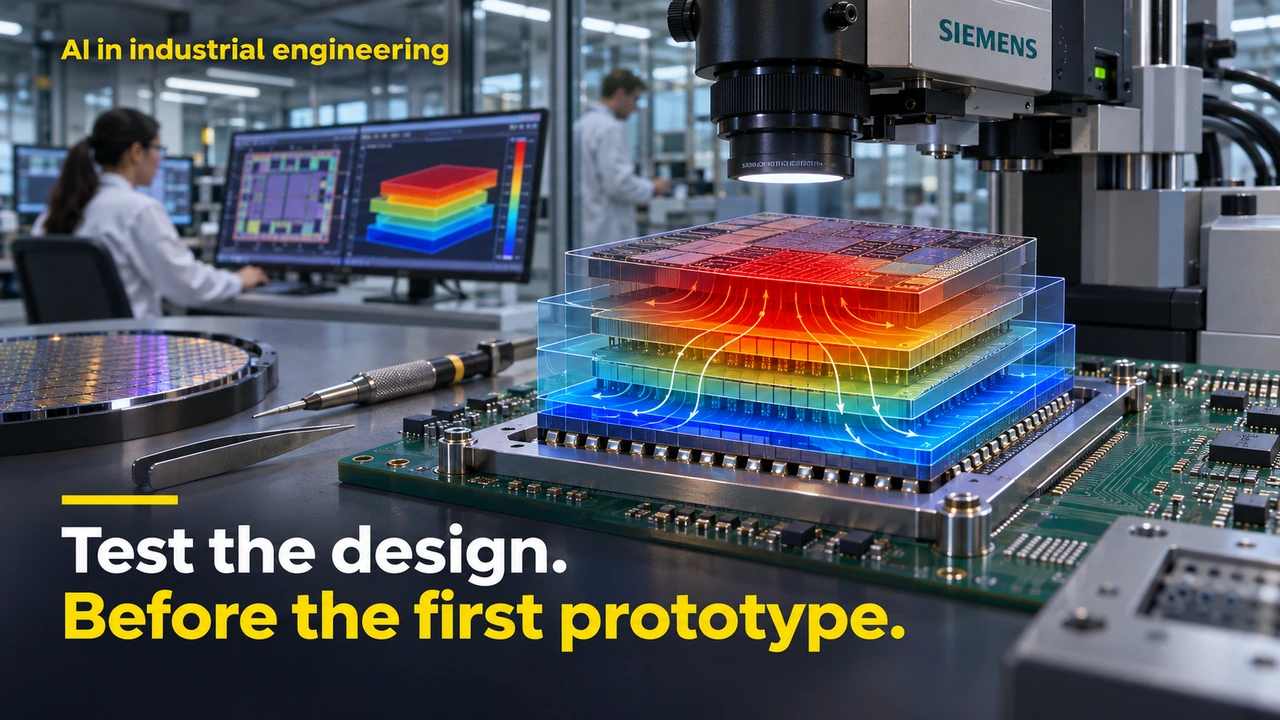
Siemens’ chip-design agents make the case for AI spending before prototyping
3D chip stacks make heat, power and electrical decisions costly once the package is built. Siemens says an AI agent can
Read article