
Is YC Funding Rails for the One Thing Built to Break Them?
The whole batch is betting agents need plumbing, the way every era before them did. From where I build, that looks like it might be the smartest pattern in venture aimed, for once, at the wrong target. I could be wrong. Here is why I keep asking.
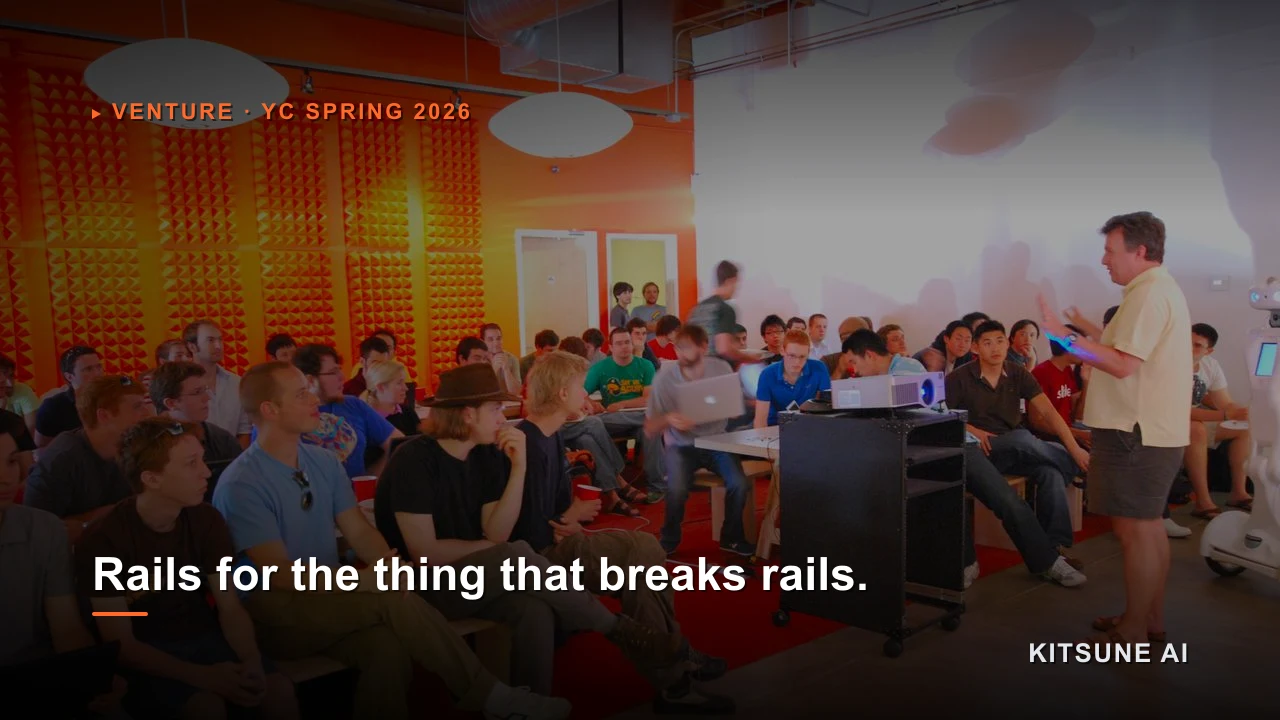
- YC's Spring 2026 batch was its most agent-heavy ever, and the conviction money went to the plumbing: tools to orchestrate, secure and test fleets of agents.
- That is the safe pattern from twenty years of tech. The picks and shovels win. And yet agentic is the first wave built to break rails rather than ride them.
- The other old reflex hiding in the batch: pointing agents at advising you, when the thing that changes a company is a system that gets built and stays.
- The opening I would bet on: agentic is the first era where the operator who has stood in the work, not the credentialed outsider, gets to build the fix.
The safe bet, placed again
YC ran its Demo Day on June 16 with around 196 companies, the most agent-heavy batch in its history. And the conviction money went where it usually goes. To the plumbing.
Superset orchestrates a hundred agents at once. Silmaril secures them against prompt injection. Arga Labs builds environments to test them before they ship. Orchestrate, secure, test. The rails for a fleet.
This is the move venture has run for twenty years, and it is usually correct. The money in a gold rush rarely sits in the gold. It sits in the picks and the shovels, the cloud, the CI, the boring middle layer every application stands on. Funding the rails for agents is the safest read in the room.
And yet.
The question I keep asking from the cheap seats
Here is the thing I cannot get out of my head, and I will say it as a builder's hunch and not a verdict, because I am running a young company from Pakistan, not sitting on a board on Sand Hill Road.
Every era venture has funded was about laying more rail. Fixed pipes, rigid APIs, standard process, the assembly line of software, where work runs down a track somebody welded in advance. The picks-and-shovels bet works because the track is permanent.
Agentic breaks that assumption at the root. An agent behaves less like a track and more like a person. It looks at a broken process, holds the goal in mind, and routes around the part that does not work. The whole promise of the technology is that it dissolves the rigid workflow instead of running on it. I am not alone in reading it this way. Satya Nadella has argued the business-app layer itself will collapse into agents, the logic migrating up into the agent until what is left underneath is mostly data and governance. a16z calls the old SaaS rule, streamline a task into software and charge per seat, no longer valid.
So I keep wondering whether building rails for agents is the first time in twenty years the reflex is aimed at the wrong thing. Plumbing for a system whose entire point is to need less of it. That last step is mine, and I will own it as a wager rather than a finding. Nobody credible is making the call out loud yet. I am not even certain it is right, and maybe a fleet does need a control tower. But I do not hear anyone in the room asking, and the unasked question is usually where the money eventually moves.
The other old reflex
The rails instinct shows up in a second form, quieter and easier to miss. A lot of the agentic talent in the batch is pointed at advising you. Agents that interview your company, map how the work flows, and hand you a transformation roadmap. The AI-native consultant.
A roadmap is just another rail. It is a track someone draws for you to walk later, and most of them get filed and forgotten the week the engagement ends. The market is already moving past it. a16z argues buyers increasingly want to pay for the outcome delivered rather than the access, and even the consultancies feel it. McKinsey now reportedly earns about a quarter of its fees from outcome-based deals, and its own senior partners admit the fundamentals of the advice business are under pressure.
The thing that actually changes a company is a system that gets built into the work and stays there, still running and still earning a year after the deck would have gone stale. The map was never the point. That is the harder, less fundable thing, and it is the one I would put my money on.
The opening I would bet on
So look above the plumbing and the advice, and you find the change that matters. Who is allowed to build at all.
For twenty years the entry ticket to building software was a pedigree. The CS degree, the lab, the right four logos on a résumé. Agentic quietly tore that ticket up. Andrej Karpathy, who ran AI at Tesla and helped start OpenAI, put it plainly at YC's own AI school last year: the hottest new programming language is English. When the interface to building is a sentence, the people who can build are no longer only the ones who learned to code. Vercel found that 63% of the people vibe-coding on its platform are not developers, they are product managers, founders and marketers. The skill that decides things now is knowing exactly where the work hurts, because you have stood in it. The system-writing is the part the agent handles.
I came into this from running real commercial operations, the kind with messy workflows and a P&L and customers who walk, rather than from a research lab. For most of tech history that put me on the buying side of software, watching other people build it. Agentic flipped that overnight. The operator who has actually lived the work can now build the agent that fixes it, and stay to make it stick, without hiring an outsider to interview him about his own company first.
I could be wrong about the rails. I am surer about this.
Watch the door
So read Spring 2026 two ways at once. The visible story is the one venture always tells, that a new era needs new plumbing, and maybe it does. The quieter story is that the era which breaks the rails also breaks down the gate, and lets in everyone who spent years operating the work while the credentialed crowd was studying it.
The rails will get funded either way. They always do. But I would put the next decade on the operators who finally get to build the thing themselves, and leave behind a system that is still working long after the roadmap would have been forgotten.
The batch funded the plumbing. I am watching the door it left open.
Google Renamed Its Coding Tool Into the Agent Era. Then I Ran Out of Credits.
Antigravity 2.0 refuses to call itself an IDE. It wants to be an "agent orchestration system." That rename is
Read article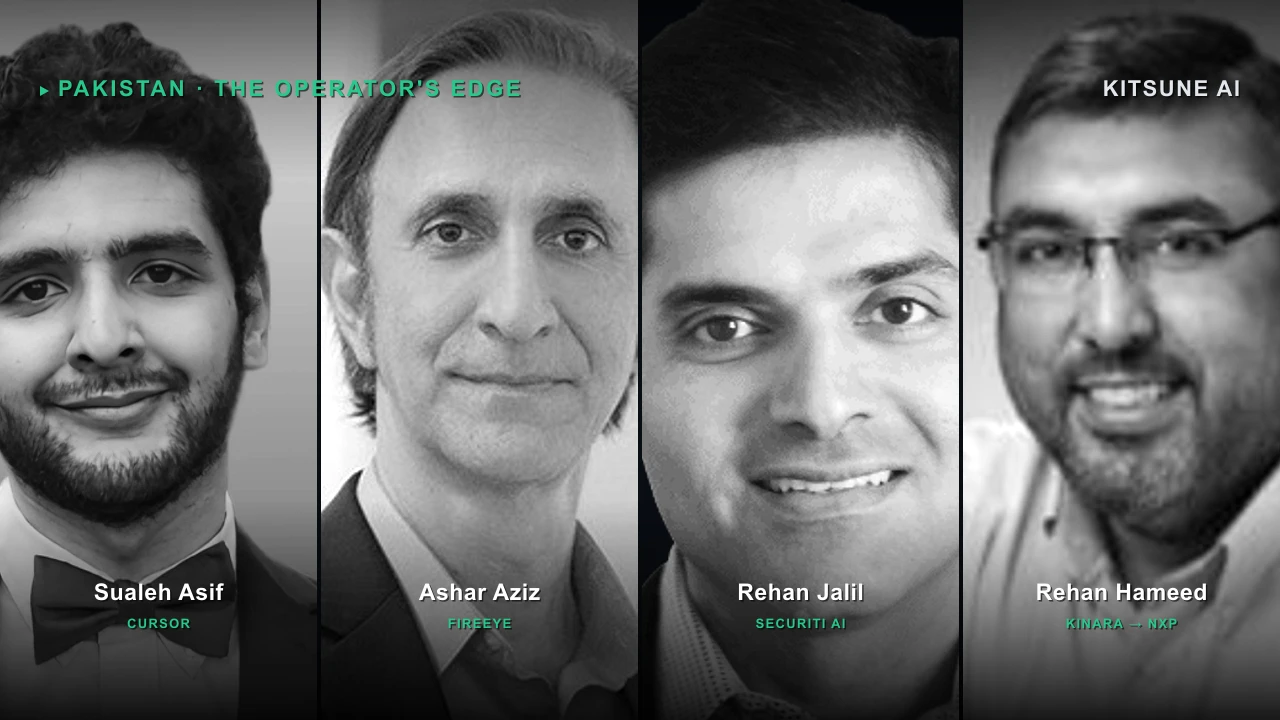
The Pakistanis Quietly Building the Machines That Replace Work
The country that sells the most human work on Earth is also producing the people building the machines that end it. That
Read article