
Google Renamed Its Coding Tool Into the Agent Era. Then I Ran Out of Credits.
Antigravity 2.0 refuses to call itself an IDE. It wants to be an "agent orchestration system." That rename is half Google gimmick and half the truest signal in the whole launch.

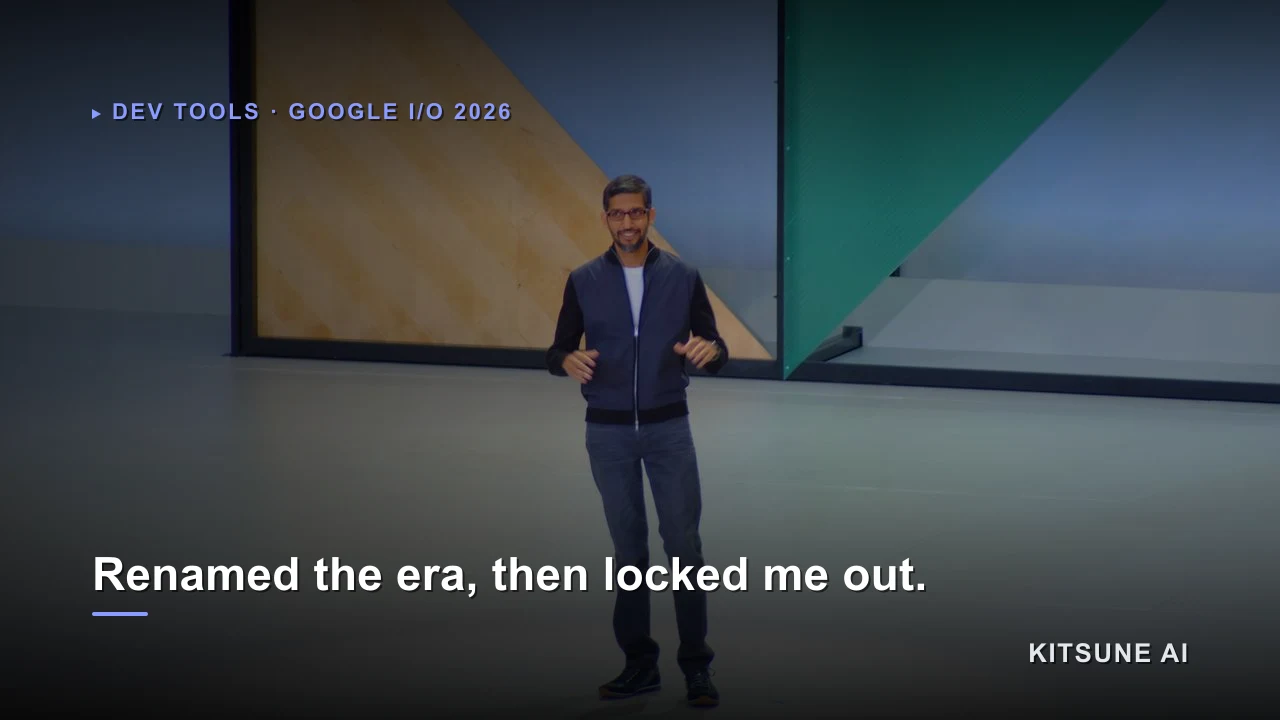
- At Google I/O 2026 Google rebuilt Antigravity as a standalone app to "orchestrate coding agents," and retired the Gemini CLI into it.
- The pitch is "manage the mission, not the machine." The unit of work moves from you editing code to you supervising a fleet of agents.
- That shift is real and industry-wide. Google did not lead it. It renamed itself into it.
- I tried it as a paying Google AI subscriber. Thin docs, no idea what it wanted from me, and my quota ran dry and locked me out before I finished anything. The category is being sold ahead of the product.
A coding tool that refuses to be called a coding tool
Google shipped a developer tool at I/O and went out of its way to tell you it is not one. And yet that rename is the part worth taking seriously.
Antigravity 1.0, from late 2025, was an "agentic IDE." Six months later, 2.0 is a standalone desktop app whose job Google describes as a place to "steer, customize, and orchestrate coding agents". The Gemini CLI is being folded into it, with Google's own reason being that "your workflows have outgrown" a single agent on a command line. The word IDE has quietly left the building. The new noun is orchestration.
So before deciding whether that is marketing, it is worth asking what the word actually claims.
What "orchestration" claims that an IDE does not
An IDE and a CLI make one assumption: you are the worker. You open a file, you type, the AI completes and assists, one thread, and you watch every line go by. The tool is a sharper pen in your hand.
An orchestration system makes a different assumption: you are the manager. You hand a goal to a planning agent, it fans out into parallel subagents that code, test and document at the same time, each running async in its own sandbox, some on your machine and some as "Managed Agents" running entirely on Google's servers. You stop reading code streams and start reviewing finished artifacts. Google's phrase for it is "manage the mission, not the machine."
Read that and the rename stops sounding like spin. The unit of work genuinely changes, from editing a file to supervising a fleet and signing off on what it produces.
Is that real, or is it just Google?
Fair question, because Google has rebranded a half-finished idea into a grand new category more times than anyone can count. (read: every messaging app it has ever shipped.) So treat the noun with suspicion and check it against the rest of the market.
It holds up. Everyone serious is already there. Cursor 3 runs up to eight agents in parallel across isolated worktrees. OpenAI's Codex farms tasks out to cloud worktrees. Claude Code spawns background agents you watch from one view. Devin ships an "Agent Command Center," a Kanban board for a fleet of agents. GitHub bet the same way with Agent HQ, on the premise that orchestrating a fleet, rather than picking a single assistant, is the dominant pattern of the next era.
So the shift is real, and it is industry-wide. The honest read is that Google renamed itself into a category other people built.
Then I tried it
Here is where the grand framing met my Tuesday.
I sat down with Antigravity 2.0 to do something real, and I could not tell you what happened. The documentation was thin enough that I could not work out what the tool wanted from me. The interface assumed a mental model nobody had taught me. The agents thought for long stretches and produced very little I could use. Then my quota ran out.
And I pay for this. I am a Google Workspace AI subscriber, on a plan I am billed for every month, and the tool still burned through my allowance and locked me out before I got anywhere practical. I am not the only one. Google slashed its quotas hard through late 2025 and into 2026, and reviewers report even paid users hitting multi-day lockouts after a single heavy run. The most common sentence in the user threads is some version of "I don't get it." I build agentic systems for a living, I pay Google for the privilege, and I still could not complete one practical mission on the tool that is named after completing missions.
Sit with that. A product that brands itself "manage the mission, not the machine" will not let you finish a single mission before it locks you out. That is a category being sold ahead of a product.
Watch the verb, not the launch
So both things are true at once, and holding them together is the whole point. The packaging is gimmick. Google killed the word IDE, retired a perfectly good CLI, and declared an "agent-first platform" on top of a tool that is mechanically still an agent-IDE with a fleet bolted on, then shipped it so rough that the people most inclined to love it bounced off the credit wall.
And the thing under the packaging is real. The job is moving from author to manager, from one assistant to a fleet you supervise. That is the same shift a whole YC batch just got funded to build the tooling for. Even a launch this clumsy is a weathervane, and it points the same way as everyone else's.
So ignore whether Antigravity works today, because today it mostly does not. Watch the verb it reached for. The day your job stops being "write the code" and starts being "run the agents that write it," you will remember that the roughest launch of 2026 was the one that said the word out loud first.
Google fumbled the tool and named the era. Watch the word it left behind.
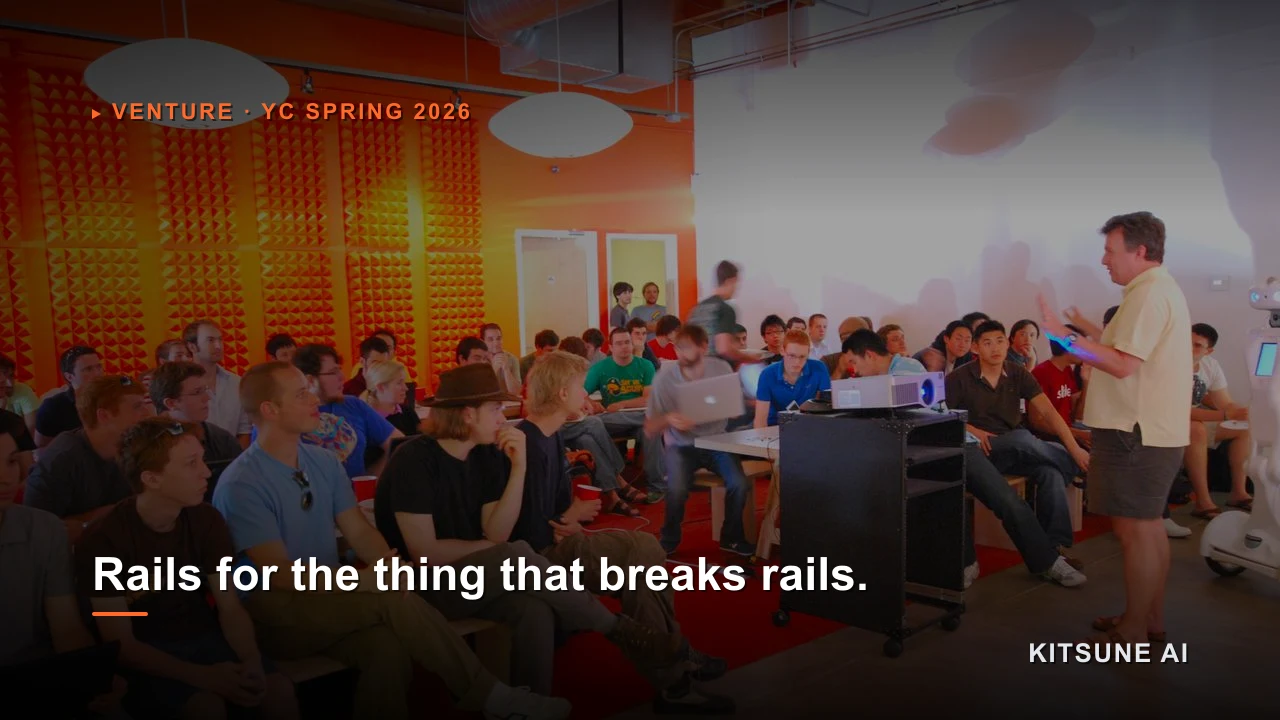
Is YC Funding Rails for the One Thing Built to Break Them?
The whole batch is betting agents need plumbing, the way every era before them did. From where I build, that looks like
Read article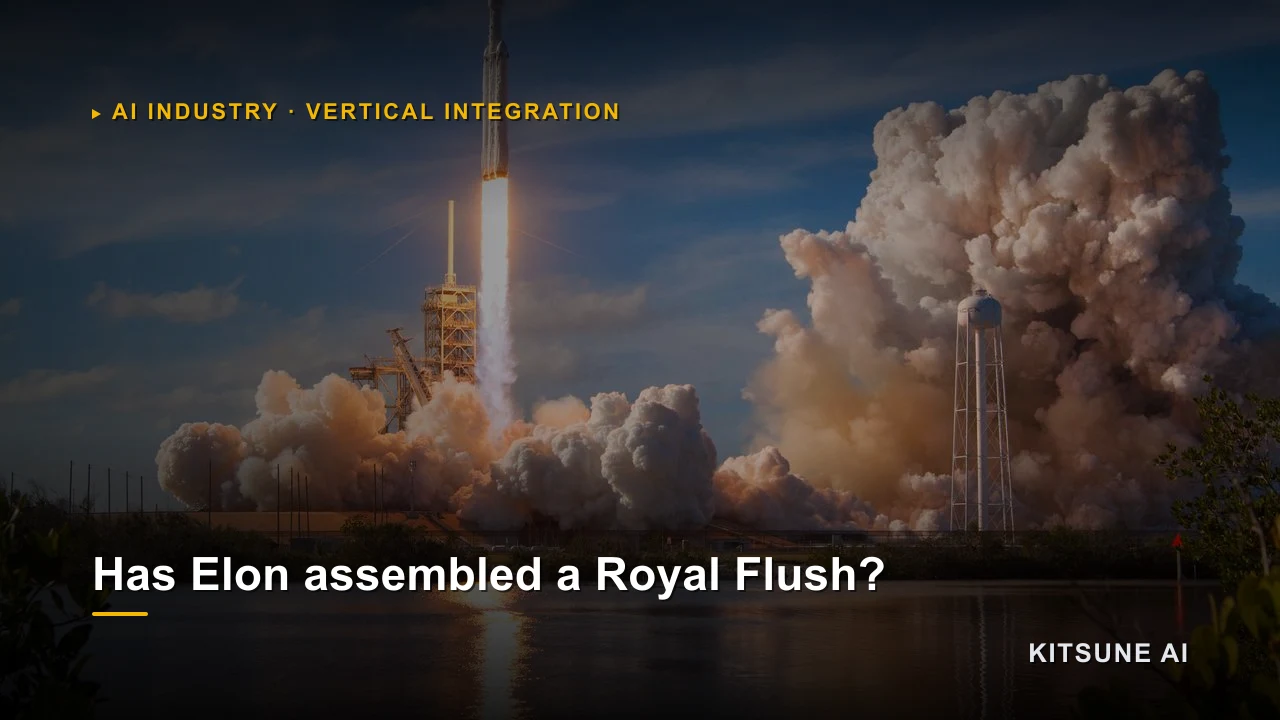
Has Elon Finally Assembled the AI Equivalent of a Royal Flush With the Cursor Acquisition?
SpaceX buying Cursor looks like one more shopping-spree headline. Lay it next to the other cards Elon is holding and you
Read article