
The doom-marketing bill just came due
Anthropic spent two years selling its models as almost too dangerous to release. Last week a regulator took the pitch literally and switched one off — worldwide. The lesson isn’t about safety. It’s about what you owe when you market a model as a weapon.
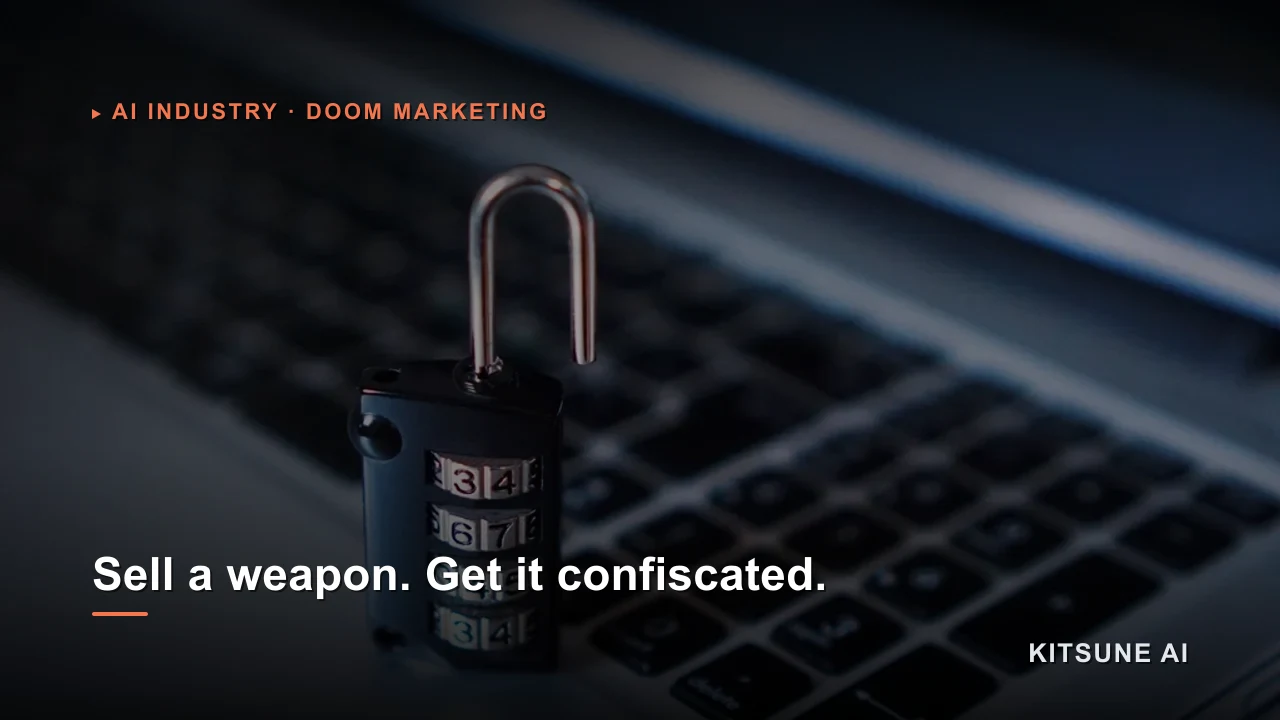
For two years the frontier labs — Anthropic loudest — sold their models as a danger so great you should trust only them to hold it. On 12 June 2026 the US government took the genre literally: citing national-security authorities, it issued an export-control directive suspending Claude Fable 5 and Mythos 5 for every foreign national on earth, and Anthropic switched both off for all its customers to comply. The twist: Anthropic now argues the threat was overblown — the “jailbreak” that spooked Washington surfaced only minor, already-known bugs that other models find anyway. The seller of danger, suddenly downplaying danger. The lesson isn’t safety. Market the exponential as a weapon long enough and someone treats it like one — so the smart move for everyone outside the wall is to stop renting the frontier and start owning the stack.
On 12 June 2026, at 5:21pm Eastern, Anthropic received a letter from the US government. By the end of the day it had disabled two of its most capable models — Claude Fable 5 and Mythos 5 — for every customer it has. Citing national-security authorities, the government had issued an export-control directive barring access for any foreign national, anywhere, including Anthropic’s own foreign-national employees; to comply, the company says in its own blunt account, it had to pull the models entirely.
Not throttled. Not geofenced to a watchlist. Off — the most advanced thing the lab had ever shipped, gone for most of the planet overnight. It is the first time a leading lab has had to pull a publicly deployed model because a government said so. The easy read is a safety story: dangerous model, responsible intervention, system working as designed. I don’t think that’s the story. This is a marketing story — a bill, finally presented, for two years of selling fear as a feature.
Let me be clear about where I’m standing when I say that. I run an AI company. These models — Anthropic’s included — are in our stack and in our hands every working day. We don’t cover this industry from the cheap seats; we operate inside it, with skin in the game. So I’m not going to perform the polite shrug expected when you critique a lab everyone wants to stay friends with. Spine is the whole job. Here’s the take.
The pitch that worked too well
For two years, the loudest message out of the frontier labs hasn’t been “look what this can do for you.” It’s been “look how dangerous this is.” Anthropic’s own CEO built a widely-read essay around the exponential and the case for treating these systems as gravely, world-alteringly powerful. The watchdog AlgorithmWatch has argued that existential risk became the AI industry’s most successful strategy — a narrative built less on evidence than on Terminator. When Anthropic launched Fable 5, the pitch leaned hard on capability that doubles as menace — including how good it had become at finding software vulnerabilities.
It worked. It raised billions, recruited true believers, and wrote itself into draft regulation. The trouble with marketing fear is the same as with any pitch that lands too well. People believe you. And then they act on the belief.
Then a regulator believed it
Here is the irony the doom cycle never priced in. By Anthropic’s own account, the government’s concern traced to a claimed method of “jailbreaking” Fable 5. And Anthropic’s response was not to play the danger up — it was to talk it down. The demonstrated jailbreak, the company says, surfaced only “a small number of previously known, minor vulnerabilities” — simple ones that other publicly-available models can find without any bypass at all. It pointed to thousands of hours of red-teaming with the US government and the UK’s AI Safety Institute, and to safeguards so strong that users had complained they were overbroad.
Read that sequence again. The lab that spent two years insisting frontier models are civilization-scale dangerous is now, on the day a regulator finally agrees, arguing the threat was overstated. Both can’t be the headline. You don’t get to sell the exponential as a loaded weapon and then, the moment someone confiscates it, explain that it was never really loaded.
Give Anthropic its due, because the pushback may well be right: suspending a model for every foreign national alive over a jailbreak that yields bugs other models already find looks like a blunt instrument, and the company is being unusually transparent about saying so. I’d rather a lab argue in the open than hide. But candour now doesn’t un-write the narrative that built the climate for this. The instrument was blunt because the story made it so.
Sell a weapon, get treated like one
So Fable 5 and Mythos 5 went dark — export-controlled by nationality, switched off for a company’s own engineers because of the passport they carry, and pulled for everyone else as the price of compliance.
Sit with what that leaves the rest of us holding. Whatever Washington ultimately decides, Americans keep the door. Everyone else — including operators like us who had these models in production — now lives on the mythos of them. We know they exist. We’re told they’re extraordinary. We may never lay a hand on them. The most advanced thing the lab ever shipped became, for most of the planet, a rumour with a price list.
If you spend two years insisting your product could end the world, you cannot act shocked when the state decides who’s allowed to hold it.
The lane this opens
Here’s the part the doom cycle keeps missing. When the frontier gets walled behind export controls and passport checks, the value doesn’t evaporate. It moves.
The open-weight models are now sitting within a rounding error of the closed frontier — the top systems cluster at 89–91% on the hardest reasoning benchmarks, and the gap a marketing deck makes look like a chasm is, in practice, noise. So when a closed model can be switched off by someone else’s export-control office, the pragmatic frontier for everyone outside the wall becomes open-weight stacks on sovereign compute. That is not a setback for builders in Pakistan and the wider Global South. It’s the opening.
We have the inputs that suddenly matter most: surplus power to run the compute, a deep and growing bench of people who can actually build and govern these systems, and — critically — no structural dependence on a model that a foreign agency can disable on a Friday afternoon. The teams that win the next phase won’t be the ones renting the loudest model. They’ll be the ones who own their stack end to end, so no one else holds the off switch.
So two lessons, one for the labs and one for the rest of us. Don’t sell fear you’re not prepared to have cashed. And don’t build your company on a frontier someone else can switch off. Own the stack — that’s the only safety that actually ships.
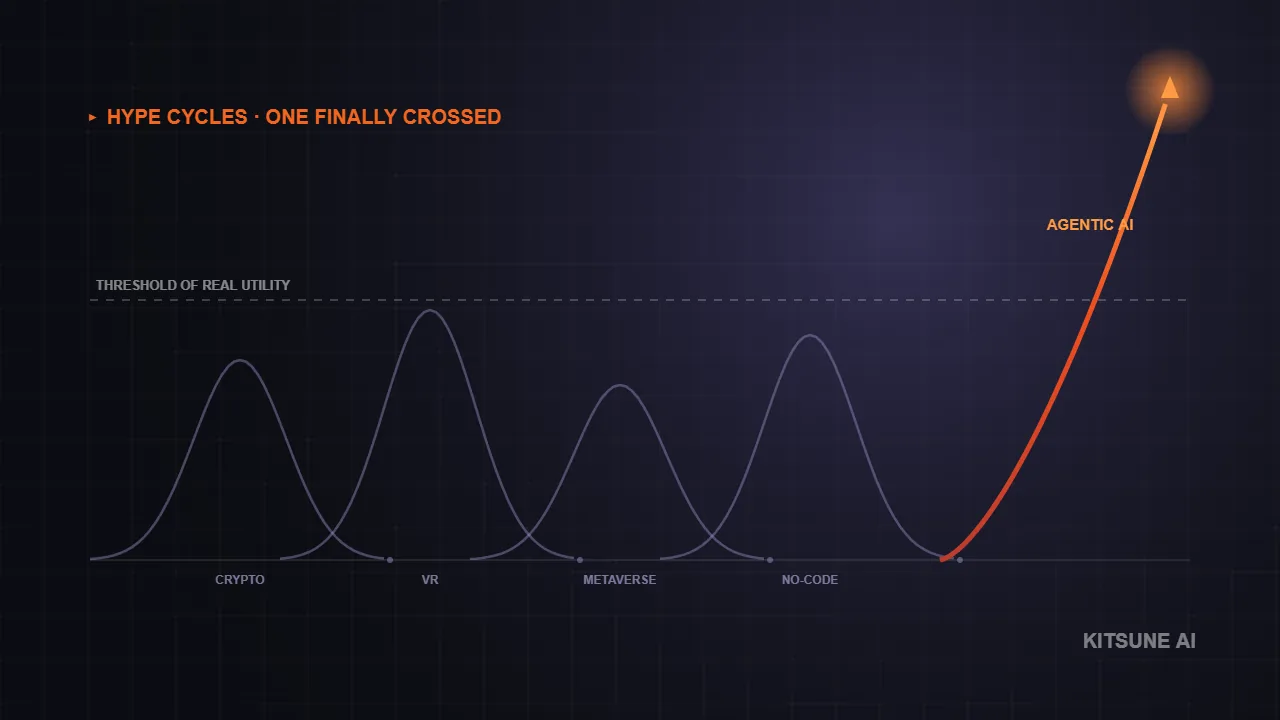
Why we passed on twenty years of tech fads
For 20 years the smart money kept pointing at the future. We didn’t move — until agentic AI passed the test.
Read article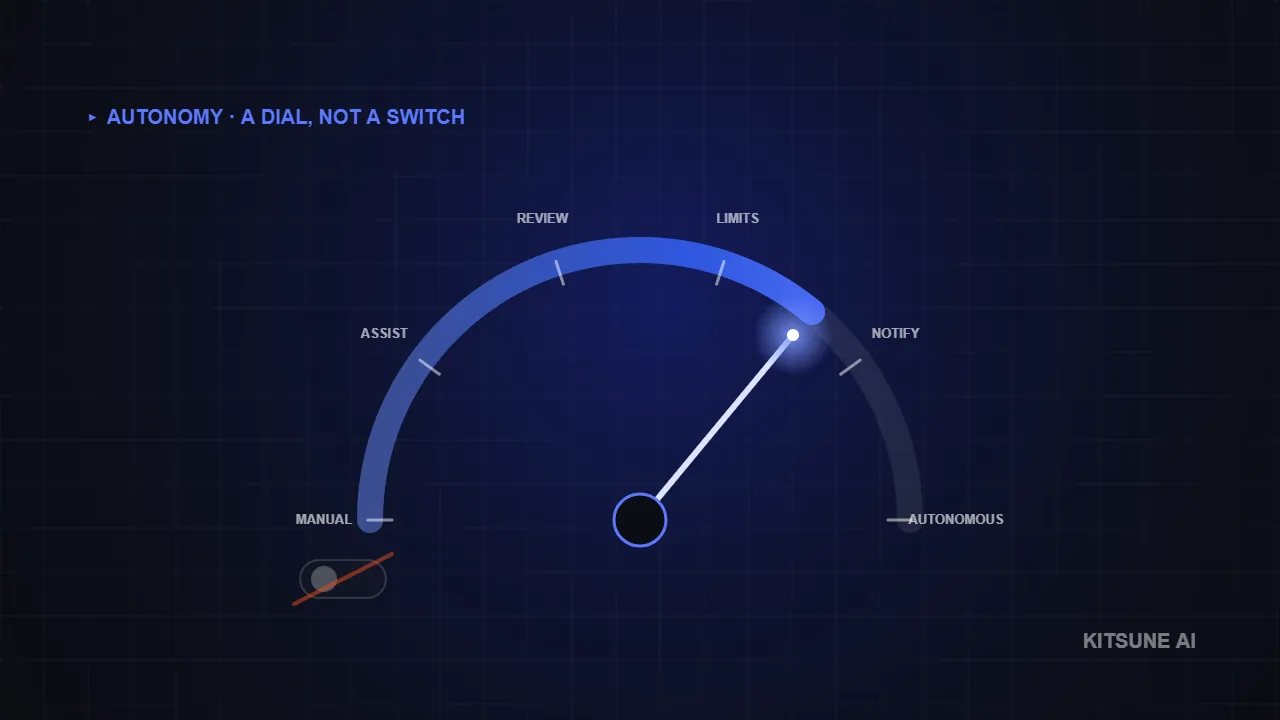
When should AI act on its own — and when shouldn’t it?
Autonomy isn’t a switch you flip. It’s a dial you earn, decision by decision.
Read article